
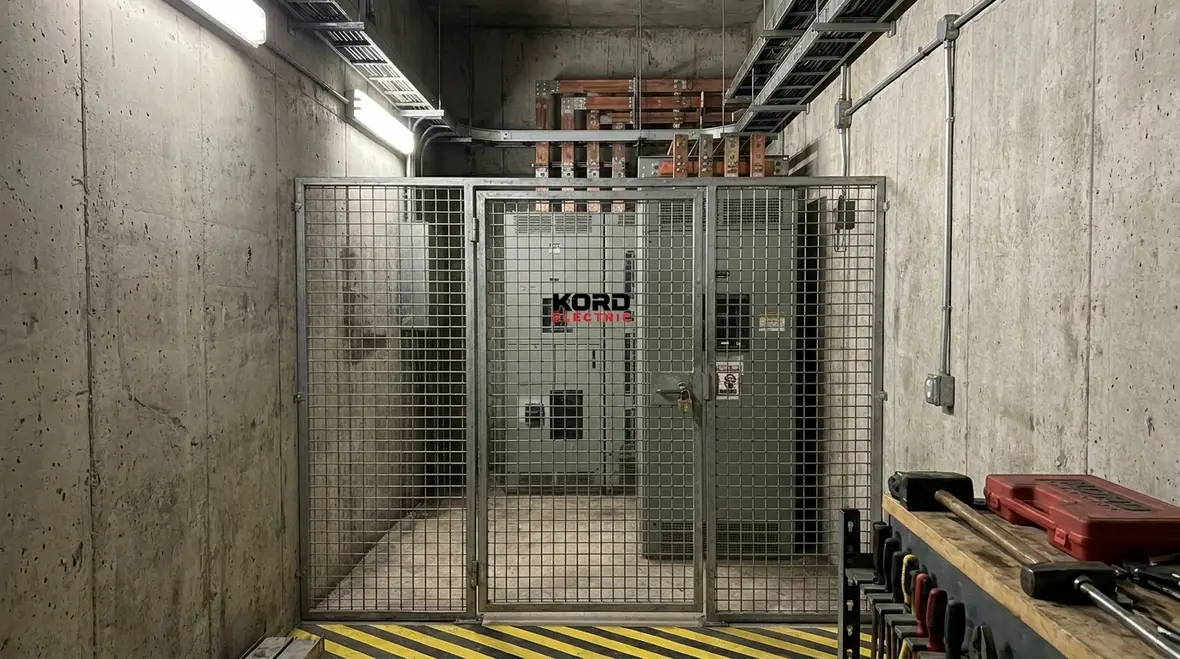
NFPA 70 110.78 NEC Vault Tunnel Guarding Code
NEC vault and tunnel guarding code at the center of life safety
At Kord Electric, we apply a careful NEC vault tunnel guarding code approach when commercial and industrial facilities face a real risk: energized conductors inside guarded spaces. In the first moments of a project, our team sets the tone by treating NFPA 70 Section 110.78 as life safety, not paperwork. We build guarding plans that match how staff will actually move through a building, and we coordinate with owners, architects, and contractors before the field work begins. Our technicians explain the reasoning in plain language, and we keep it calm, because nobody needs an electrical walkthrough that feels like a horror movie sequel. If you have ever watched a film where the hero pokes the wrong panel, you already understand why guarding matters.
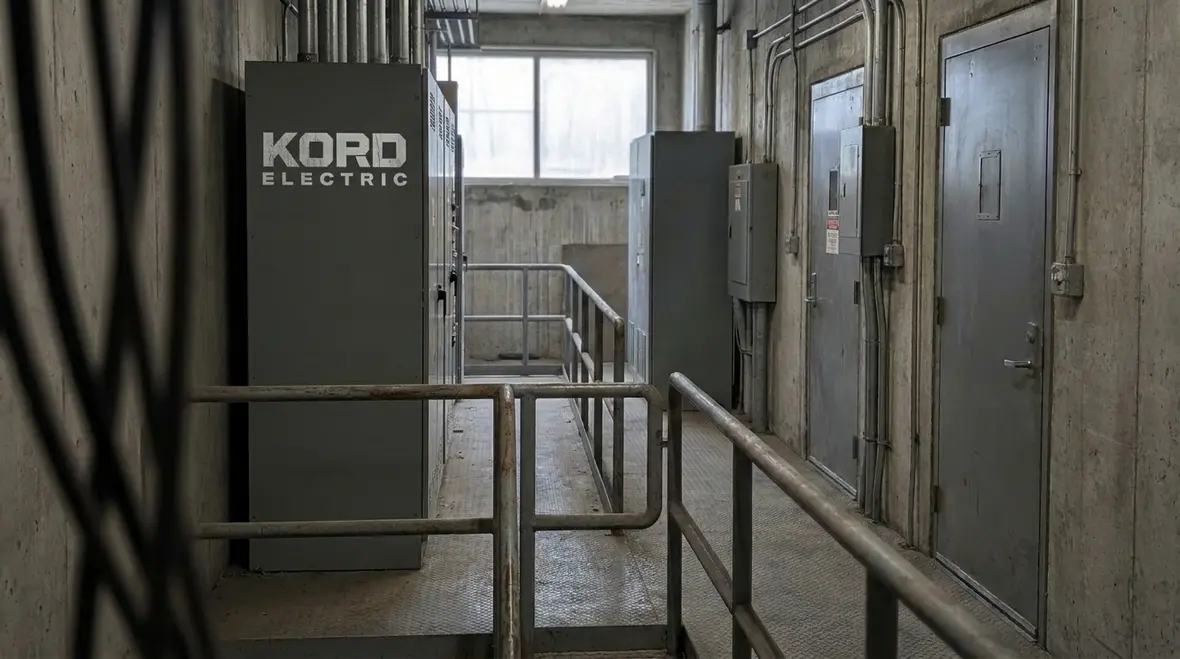
In our broader code education work, including resources such as How to Read NFPA 70: A Practical Guide to the National Electrical Code, we keep the same theme: the code is not a trivia game. It is a safety system. Vault and tunnel guarding lives inside that system as one of the protections that must work perfectly on an ordinary day, not just during inspections.
What NFPA 70 Section 110.78 requires for vaults and tunnels
Section 110.78 focuses on guarding in and around electrical vaults and tunnels, where wiring and equipment can pose shock and burn hazards. In simple terms, it limits access so an untrained person cannot reach exposed energized parts. Therefore, the code expects physical barriers and appropriate openings, plus clear rules for how doors, enclosures, and entrances operate.
To get this right, we first map the exact boundaries of the vault or tunnel, and we then confirm where energized components exist relative to possible entry points. Next, we verify that any openings and access points do not invite casual contact. After that, our team checks that the guarding strategy fits the facility layout, traffic flow, and maintenance needs. You cannot treat guarding like a decorative fence. It has to be strong, correct, and consistent with the hazards in the space.
We also line up 110.78 with related NEC requirements that affect the same spaces. Our team connects guarding details to working clearances, equipment accessibility, and labeling rules covered in other sections, so the overall design does not contradict itself. If you have been following our series on NEC fundamentals, including deep dives into topics like workmanship, product certification, and system design, you already know we build those connections on purpose so facilities do not end up with isolated “code islands” that ignore each other.
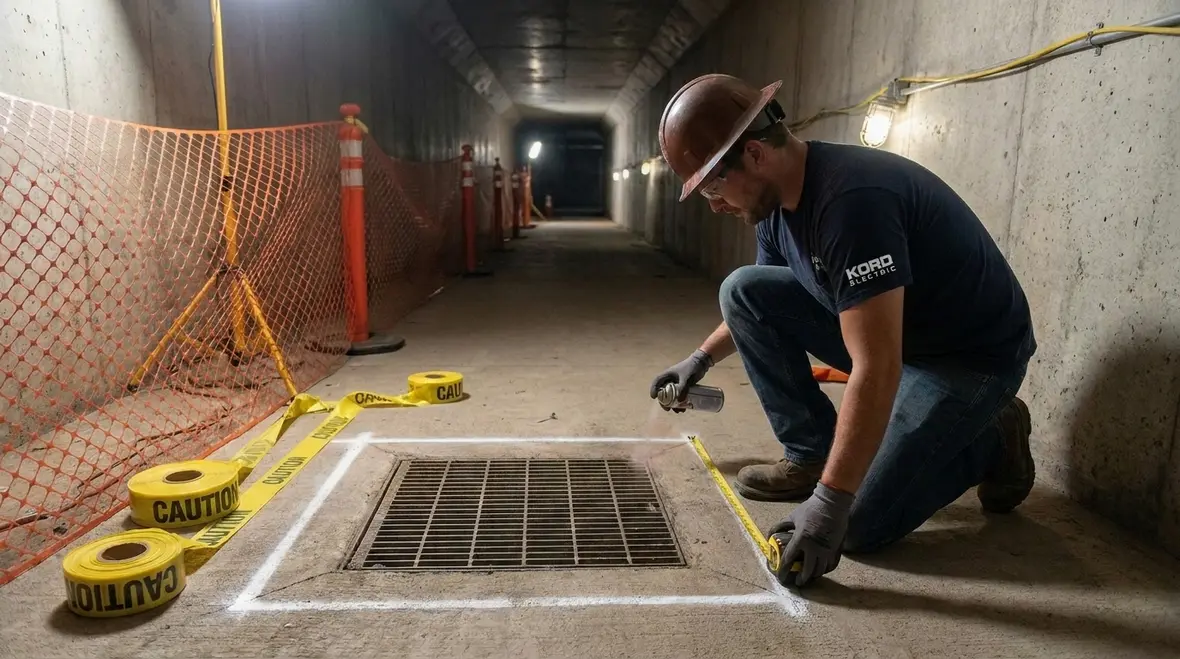
How we plan guarding so access stays controlled
Even when people mean well, access becomes messy in real facilities. For example, a contractor might carry equipment through a corridor, or a tenant might need service access at an odd hour. However, when a vault or tunnel includes exposed energized parts, uncontrolled access turns into a preventable emergency.
For that reason, we build guarding plans around the people who will be nearby. Our expert service staff explains options and constraints during design and during field verification. Then we align the final details with the code intent: keep unauthorized persons out, limit reach into hazardous zones, and provide safe entry for trained personnel.
We also consider the guard materials, mounting methods, and the way the building handles doors and locks. Additionally, we examine how staff handles signage, work procedures, and inspection access. In many projects, the plan improves after early feedback, because our technicians see what teams actually do during maintenance.
That same field-based thinking shows up in our other design work, from data-driven electrical design to emergency power planning. We are not interested in drawings that only function on screen. The NEC vault tunnel guarding code must hold up when a real tech with real tools and a real schedule walks down that tunnel at 2:00 a.m.
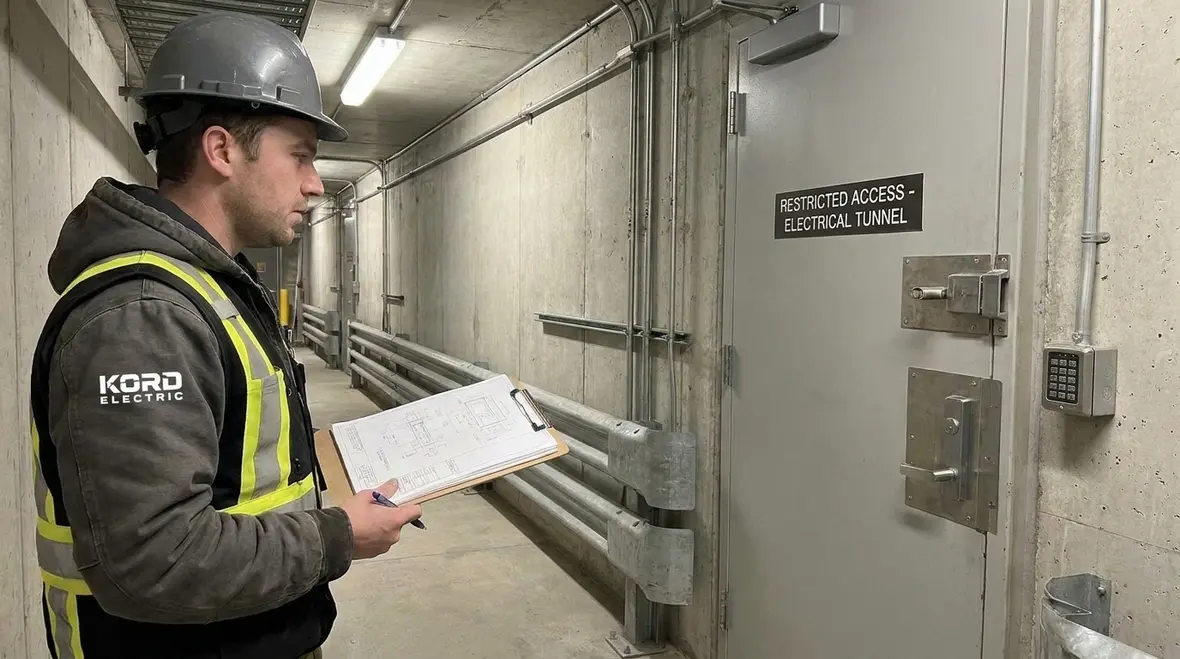
Doorways, openings, and reach limits that actually matter
Guarding fails when a detail looks “close enough” on paper. It fails when someone can reach in, or when an opening allows access to energized parts without tools. So, we evaluate openings with a safety mindset, and we confirm they remain guarded in a way that matches the risk.
We look at where doors swing, where gaps appear at frames, and how fences or barriers connect to adjacent structures. Then we evaluate any maintenance openings, because those are common points of human shortcuts. Next, we confirm that any required access remains controlled by the right hardware and procedures, so the facility does not become the friend who always “forgets” the key.
Our technicians also verify that guards stay installed through construction changes, tenant improvements, and future upgrades. In commercial and industrial facilities, that is where many projects stumble. Equipment gets moved, panels get replaced, and access routes change. Therefore, guarding needs a lifecycle plan, not a one time install.
We often pair this guarding review with other reliability work, such as post-installation issue checks and power quality assessments. That combined approach lets us catch situations where a seemingly minor door hardware swap or a new cable tray cutout suddenly creates an unguarded reach path to energized equipment.

Coordination between electrical rooms, vaults, and tunnel routes
When electrical vaults and tunnels sit near other building systems, the guarding plan cannot sit alone. We coordinate with mechanical, fire, and building teams because the hazards do not respect department lines. Fire doors, egress paths, ventilation layouts, and cable routing can all affect where guards go and how people pass by them.
At Kord Electric, we sequence the work so guarding gets installed before it gets boxed in by other trades. Meanwhile, we document how the tunnel or vault connects to the rest of the building. Then we verify that the route remains safe for maintenance personnel, and safe for everyone else.
We also consider how emergency response teams operate. If they need access, they must have a clear, safe pathway and a predictable setup. So, we help owners plan communication and responsibilities. We keep the process steady, with our expert service staff explaining the steps and the reason behind them, so teams do not treat this like a mystery door in a video game.
This is also where our broader building system design work comes in. When we plan full power distribution for commercial facilities, our crews look at vaults, tunnels, and emergency power systems at the same time, making sure the guarding decisions still align with overall electrical system design and emergency power strategies. That way, you do not get one drawing that assumes a locked steel door and another that quietly expects someone to duck under a temporary chain.
Why maintenance and inspections decide if guarding holds up
Guarding is not a “set it and forget it” item. Over time, hardware wears, components settle, and modifications creep in. As a result, we build inspection habits into our service approach. We verify that guards stay intact, that access points remain locked or controlled as required, and that no new openings appear during upgrades.
During inspections, our technicians look for practical issues: bent barriers, loose mounting, damaged panels, and unplanned gaps. Then we check whether signage and procedures still reflect reality. Also, we examine cable entry areas, because routing changes can unintentionally create new hazards.
And yes, we have seen situations where a guard existed, but someone later installed a fitting that changed the clearance and reach. That is why we treat NFPA 70 Section 110.78 as an ongoing obligation. In commercial and industrial facilities, the cost of a failure is not just equipment damage. It can involve injury, downtime, and legal exposure. Nobody wants that kind of plot twist.
To keep that plot twist off your maintenance log, we often integrate guarding checks into broader service programs such as electrical troubleshooting in Los Angeles County, preventive maintenance rounds, and power quality reviews. That way, the NEC vault tunnel guarding code is not a once-a-year box to tick, but a standing item that stays aligned with real-world conditions.
Featured guidance for commercial and industrial facilities
Commercial and industrial facilities need more than generic guidance. They need a guarding plan that matches real electrical layouts, realistic access patterns, and service workflows. For that reason, we align our process with the broader NEC approach to safety and installation clarity, including how the code explains requirements for safe working spaces, equipment access, and hazard control.
We also reference the code education resources our clients ask about, including interpretations and teaching materials from our network of fire and electrical information platforms, such as Kord Fire resources and broader guidance sites like firepumps.org. These sources help stakeholders understand how NFPA 70 and NEC safety goals fit together in real systems. However, we still apply the final details through field verification and engineering judgment, because the building does not read the internet.
If your team wants to deepen its understanding of the code beyond Section 110.78, resources like our guide on understanding NFPA 70 and the National Electrical Code for 2026 and our walkthrough of how to read NFPA 70 line by line can turn a dense standard into a practical tool. From there, the NEC vault tunnel guarding code becomes part of a larger safety picture instead of a single, isolated rule.
FAQ about NFPA 70 Section 110.78 guarding
Conclusion: let Kord Electric verify your guarding plan
Guarding vaults and tunnels should feel steady, not rushed. At Kord Electric, we verify that your NFPA 70 compliance for vault and tunnel guarding matches real conditions in your facility, not just assumptions. Our technicians explain every finding and we help you plan next steps that protect people and reduce downtime. If you are updating equipment, redesigning access routes, or improving safety standards, contact us for a code focused review and a clear action plan you can trust.
For commercial and industrial properties across the region, our dedicated Los Angeles County electrical services team can fold NEC vault tunnel guarding code verification into broader electrical system upgrades, reliability projects, and emergency power planning. That way, your vault and tunnel protections grow along with your building, instead of lagging behind the next renovation.
If you are ready to connect the dots between NFPA 70, practical guarding layouts, and long term facility safety, we are ready to help you map the route from your first walkthrough to a verified, documented NEC vault tunnel guarding code strategy.


