
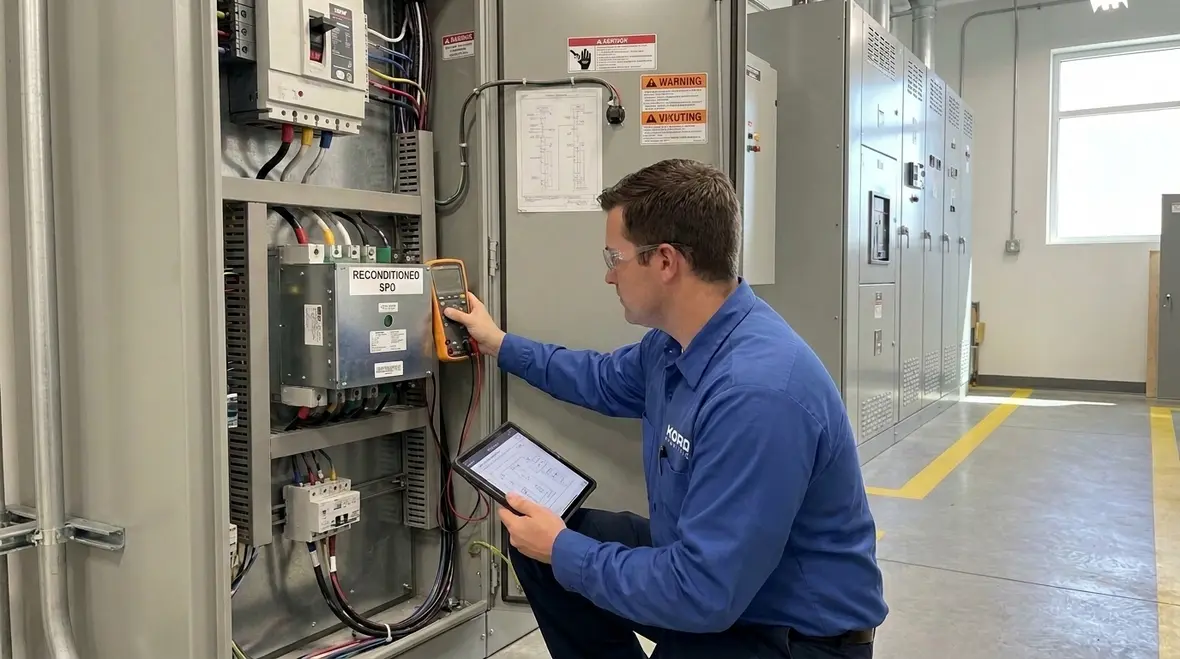
NFPA 70 242.3 NEC Reconditioned SPD Allowed Rules
At Kord Electric, we work with commercial and industrial facilities and major property buildings, where protection must be real, not hopeful. That is why our teams carefully evaluate NEC reconditioned SPD equipment when the project calls for it. Specifically, we often look at NFPA 70 Section 242.3 and the question many facilities ask: are reconditioned surge protective devices allowed, and under what rules? In the pages ahead, our expert service staff breaks it down in plain language, with the calm confidence of people who have actually read the fine print instead of clicking “agree” on it. And yes, we keep it engaging, because electrical code talk can put anyone to sleep faster than a sitcom rerun.
NFPA 70 Section 242.3 in plain terms, and why it matters
NFPA 70, the National Electrical Code, gets updated with the goal of reducing risk and improving safety. Within that code, Section 242.3 addresses reconditioned surge protective devices. In other words, it does not treat reconditioned SPDs like random “used parts.” It sets conditions under which reconditioned units can be considered acceptable.
To keep it simple, we do not just ask whether an SPD works. We ask whether it meets the allowance criteria in 242.3 and whether the device can perform its surge protective function reliably for the environment it will serve. Therefore, when others rush this step, we slow down. Our technicians and expert service staff prefer fewer surprises later, because downtime never sounds funny in a service call.
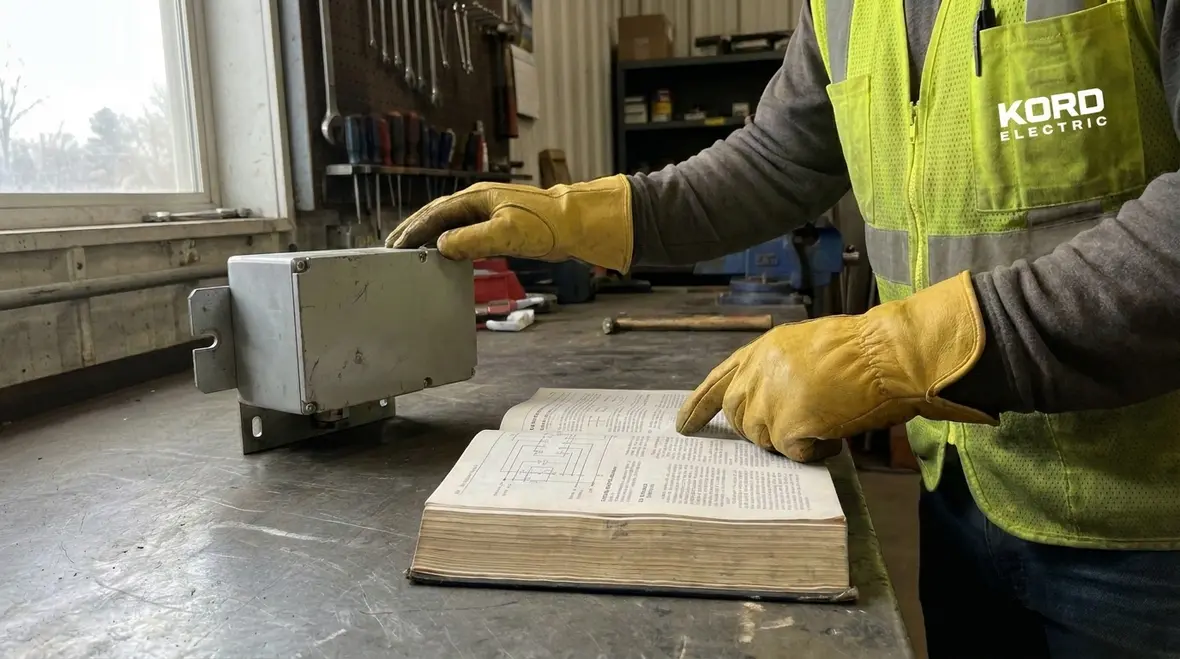
If you want more background on how the National Electrical Code shapes modern design, our guide on understanding NFPA 70 and the NEC for 2026 walks through how code updates turn into real-world decisions in commercial and industrial buildings.
What the code permits for NEC reconditioned SPD equipment
In commercial and industrial settings, surge events come from many places: utility switching, lightning effects, motor starts, drive faults, and even the everyday chaos of heavy equipment. Consequently, SPDs must respond fast and keep doing their job over time.
Section 242.3 allows reconditioned surge protective devices when the device is reconditioned in a manner that restores it to a condition suitable for its intended use, and when certain performance expectations are met. However, the key point is that the code does not give a blanket “yes” that covers every reconditioned unit out there. Instead, it requires that the reconditioned SPD be brought back to an acceptable standard.
In practice, that means facilities should only use reconditioned units that are handled by capable parties with documented processes. Also, the unit must be evaluated against the requirements that support proper operation. Our team expects documentation and verifies that the device aligns with the system needs before we ever recommend installation. If that sounds like extra work, it is. Yet it prevents the kind of failure that makes people say, “We thought it would be fine.” That phrase has ended more projects than bad coffee.
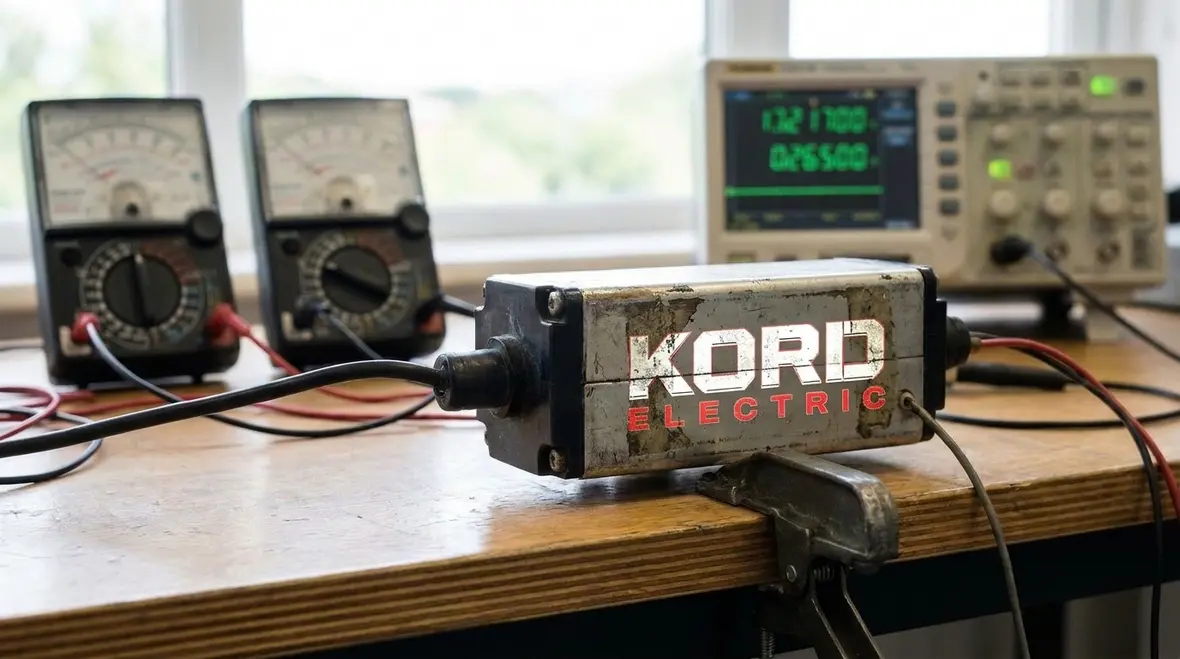
We also see that SPDs live inside larger protection strategies. In many projects, surge protection is part of the same planning mindset we use for data-driven electrical design for commercial and industrial facilities, where every protective device earns its place with clear performance expectations instead of guesswork.
How reconditioning should be documented and verified
Even if a device “looks good,” we treat surge protective devices like performance equipment, not decorative hardware. Therefore, reconditioning must include steps that restore protective capability and confirm operation. Our technicians focus on evidence, not hope.
Typically, verification and documentation should cover the following items in a way that makes sense to inspectors and owners:
- Process records showing what was replaced, repaired, or tested
- Functional testing that confirms the SPD meets its protective role
- Component integrity where applicable, so the unit does not rely on unknown internal condition
- Labeling and ratings that match the application in the field
- Installation suitability such as correct configuration for the electrical system
Then we add our own professional layer. Because in large buildings, a surge protection plan is not isolated, and the SPD must integrate with coordination, grounding, and the overall panel strategy. When our expert service staff reviews a project, we align the device selection with the facility’s electrical design and operating patterns. In other words, we make sure the reconditioned unit fits the job, not just the shopping cart.
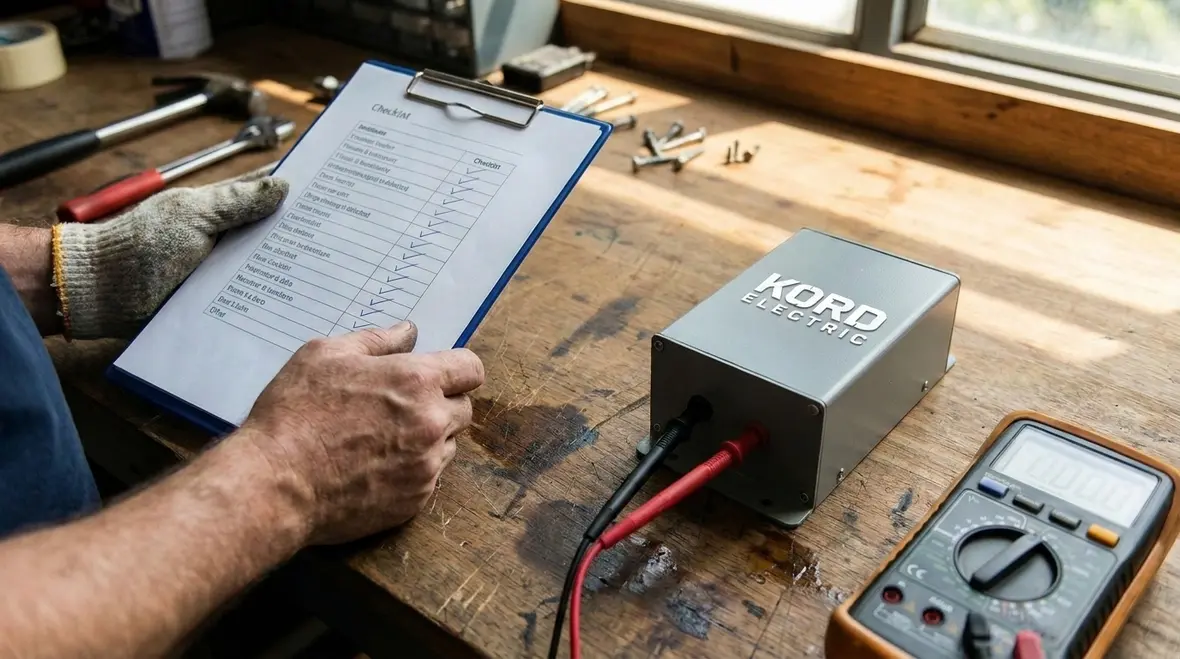
Good documentation also makes future upgrades and hazard prevention simpler. The same disciplined record-keeping that supports safe SPDs also supports proactive electrical hazard prevention in commercial spaces, where every service visit builds on clear information instead of detective work.
NEC coordination, grounding, and the “it protected something… eventually” problem
A surge protective device cannot perform well if the rest of the system undermines it. That is where many facility teams get tangled. They focus on the SPD itself and forget that surges travel through the path you give them. Therefore, the installation details matter as much as the device choice.
Our approach in commercial and industrial environments includes checking coordination and installation practices that support proper surge diversion. When SPDs are not coordinated or when grounding is weak, surges can rise to voltage levels that stress connected equipment. Then the owner gets a repair bill, and someone inevitably says, “But the SPD was installed.” Yes, it was. Still, the energy found another route. Electricity always does. It is like a pop star with a backup plan.
So we look closely at:
- Surge path, including proper conductor sizing and connection integrity
- Grounding design, so protective action routes current safely
- Coordination between SPDs at service equipment, panels, and distribution points
- Panel and enclosure conditions, including terminations and mounting practices
As a result, NEC reconditioned SPD equipment can perform correctly only when the installation supports it. We help facilities avoid the “technical truth” that still leaves equipment unprotected.
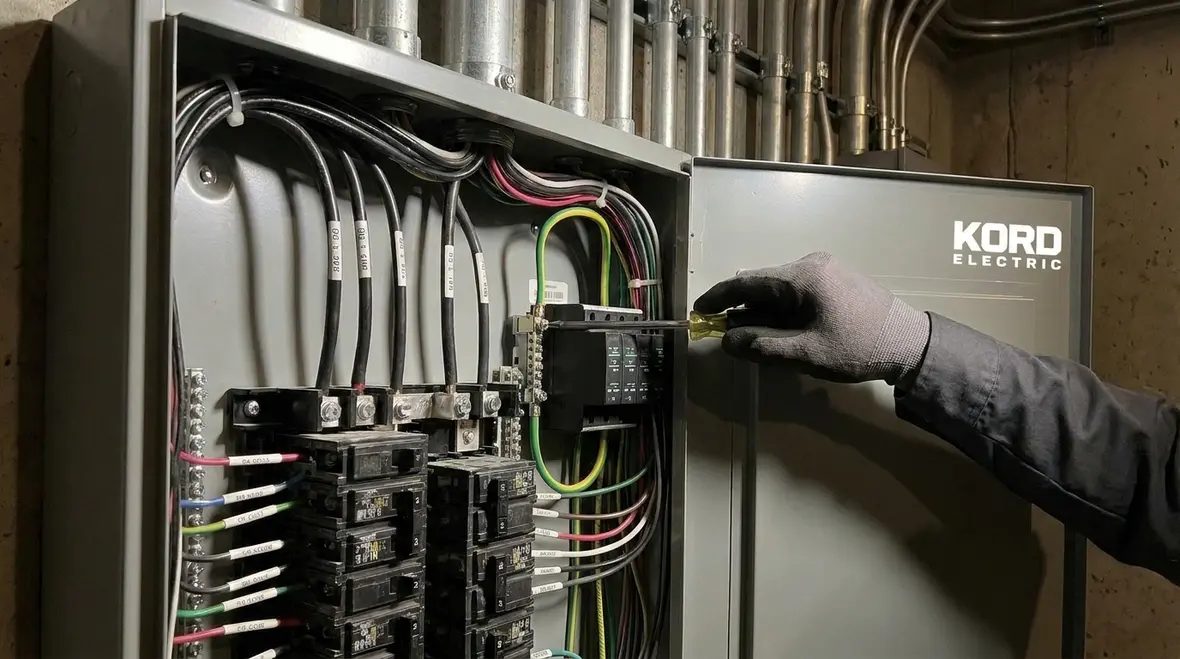
These same coordination habits show up in other work we do for major properties, such as electrical building integration that connects power, controls, and building systems. When surge protection, grounding, and distribution all agree, buildings behave predictably instead of acting like they are improvising under pressure.
What our technicians do on site for commercial and industrial buildings
Kord Electric supports major property buildings and commercial and industrial facilities, and our process reflects that reality. We do not install protection plans like we are filling out a form. We treat it like a system.
First, our technicians review the facility electrical layout and identify where surges cause the most stress on the equipment. Then we match SPD type, ratings, and configuration to the system. After that, we verify the installation plan and check details that impact real performance, such as terminations, routing, and grounding continuity.
When reconditioned SPDs enter the conversation, we also add a verification step. We request the reconditioning documentation and confirm that the unit meets the expectation required by NFPA 70 Section 242.3. Next, we evaluate whether the reconditioned unit aligns with the surge coordination strategy for that site. Finally, we oversee installation so nothing gets lost between the engineering drawing and the actual wiring.
In short, we help facilities make a decision they can stand behind. And yes, we explain it clearly. Our expert service staff speaks in the language of owners and site managers, because code compliance should not require a secret decoder ring.
Often, surge protection work is packaged with broader reliability projects. For example, a facility that upgrades SPDs may also be planning building electrical system design for commercial power or EV infrastructure. Treating those projects together keeps coordination tight and keeps long-term maintenance calmer.
Where facilities make mistakes, and how we help them avoid them
In the field, we see predictable patterns. Some teams treat reconditioned products as a cost shortcut without checking the code conditions. Others focus on the purchase and skip the system review. Still others assume that any surge device will coordinate automatically. That assumption is where good intentions go to trip over their own laces.
Common mistakes include:
- Using a reconditioned SPD without adequate documentation that shows it was restored to an acceptable condition
- Ignoring coordination and placing devices in a way that does not support the intended energy management
- Overlooking grounding and termination details that can limit surge diversion
- Skipping an installation review and then blaming the SPD when equipment faults
- Failing to align ratings with the site electrical conditions
To keep projects smooth, we guide facilities through a disciplined process: selection, documentation check, integration planning, and installation oversight. Therefore, when NFPA 70 Section 242.3 comes up, our teams respond with clarity rather than guesswork. And if someone tries to sell a “universal” reconditioned unit for every building, we politely decline. Electricity is not that flexible, even if the salesperson thinks it is.
Sometimes, fixing those early mistakes opens the door to other improvements. For example, when we correct grounding and panel conditions for SPD performance, we often help owners at the same time with Los Angeles County electrical services for broader system upgrades, turning a code concern into a long-term reliability win.
FAQ about NFPA 70 reconditioned SPDs for commercial buildings
Conclusion and call to action
NFPA 70 Section 242.3 does not give a casual green light to reconditioned SPDs. Instead, it sets real expectations that protect equipment and people in commercial and industrial buildings. At Kord Electric, we help owners and site teams make the correct choice by verifying documentation, matching the device to the electrical system, and installing it with proper coordination and grounding. If you want dependable surge protection without guesswork, contact us. Our expert service staff will explain the path, step by step, and help you protect what you cannot afford to lose.
Whether you are evaluating NEC reconditioned SPD equipment for a single service entrance or planning a wider protection and reliability program, we can help you tie surge protection into your broader electrical strategy so it works with your panels, your operations, and your future projects.


