
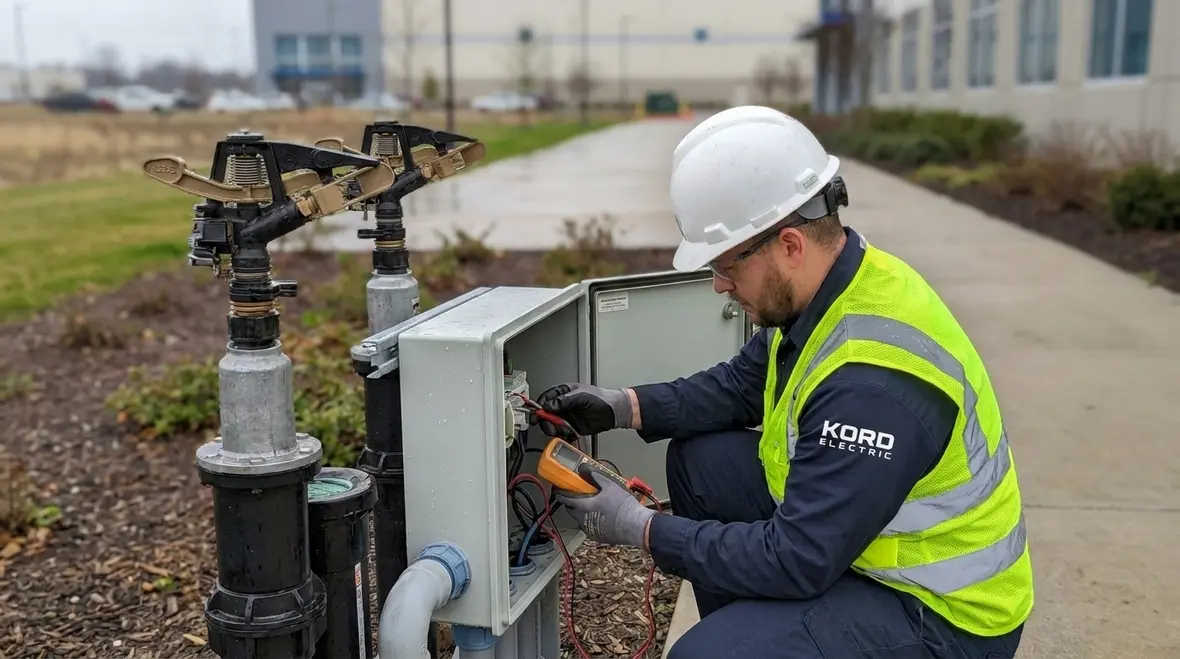
NFPA 70 NEC Compliance Irrigation Connectors by Kord Electric
Kord Electric helps commercial and industrial facilities stay safe and compliant with the electrical standards that govern how power systems get built, inspected, and maintained. In our daily work, we often see contractors and property managers overlook small details, and those details grow into big problems. For example, NFPA 70 Section 675.17 irrigation connectors matter because they guide safe connections in systems that include irrigation wiring and related components. When the right connector type and installation method get used, the system runs with less risk of loose joints, overheating, or hidden failures. And yes, we do see the “it still works, so we will ignore it” approach. In electrical work, that logic holds about as well as a screen door on a submarine.
What the NEC really does for commercial power
The National Electrical Code, often called NFPA 70, does not exist to complicate life. Instead, it sets practical rules that help reduce fire risk and improve electrical performance. We use it as a common language for electrical design, installation, and inspection across many trades. As our expert service staff explains during site walkthroughs, the NEC connects safety goals to clear installation requirements, which helps facilities avoid guesswork.
Additionally, the NEC shapes how we plan circuits, protect equipment, size conductors, and install devices correctly. For commercial and industrial facilities, that matters because systems run longer, serve more loads, and face harsher operating conditions than small residential setups. Therefore, we approach compliance as a system-wide effort, not a checklist exercise.
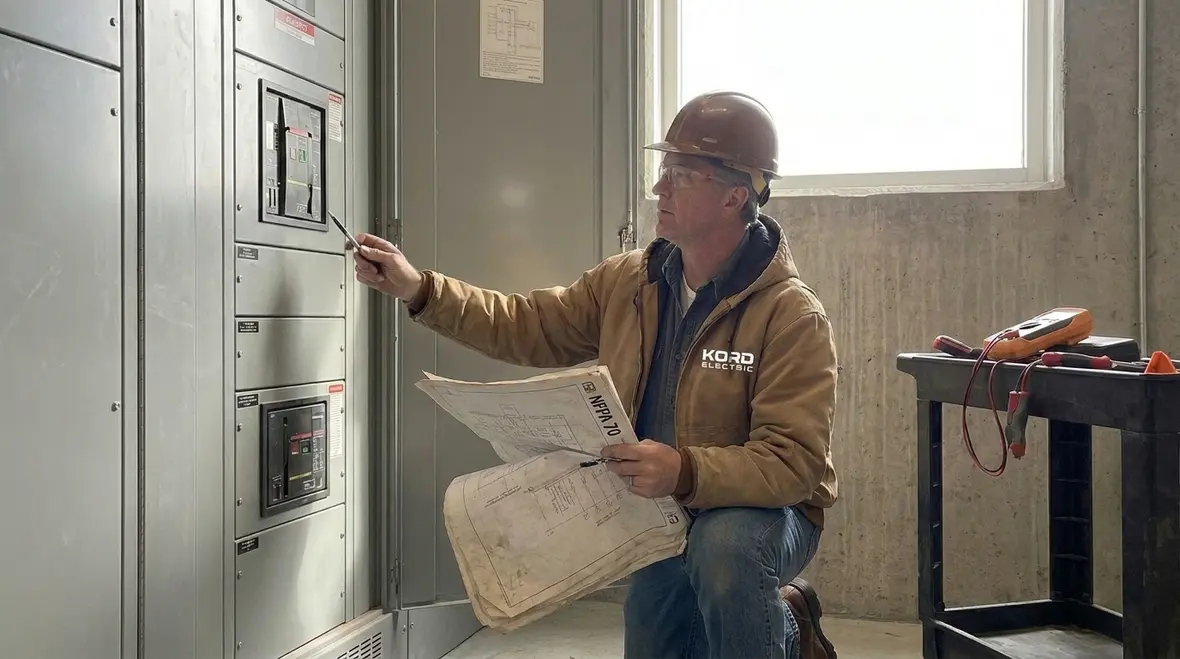
For readers who want a broader foundation in the code itself, Kord Electric also shares guidance on the National Electrical Code in resources like Understanding NFPA 70: The National Electrical Code Explained for 2026, which walks through how the code shapes real-world design and inspection expectations.
How Section 675.17 irrigation connectors affect real job sites
Section 675.17 irrigation connectors focus on how we join and terminate wiring used in irrigation-related applications. Even when these systems seem minor compared to major switchgear or large feeders, the wiring path still affects heat, water exposure, and long term stability. If a connector lacks the right construction or gets installed incorrectly, it can create a weak link that fails under vibration, moisture intrusion, or thermal cycling.
To keep things clear, our technicians treat these connectors as part of the electrical “safety chain.” First, we confirm the intended use and environment. Next, we match the connector type to the installation context and follow the method the standard expects. Then, we verify the work on site using practical checks, so the connection does not depend on luck. And while luck might be great for a sitcom plot, it is not a strategy for electrical safety.
Connecting code language to field conditions
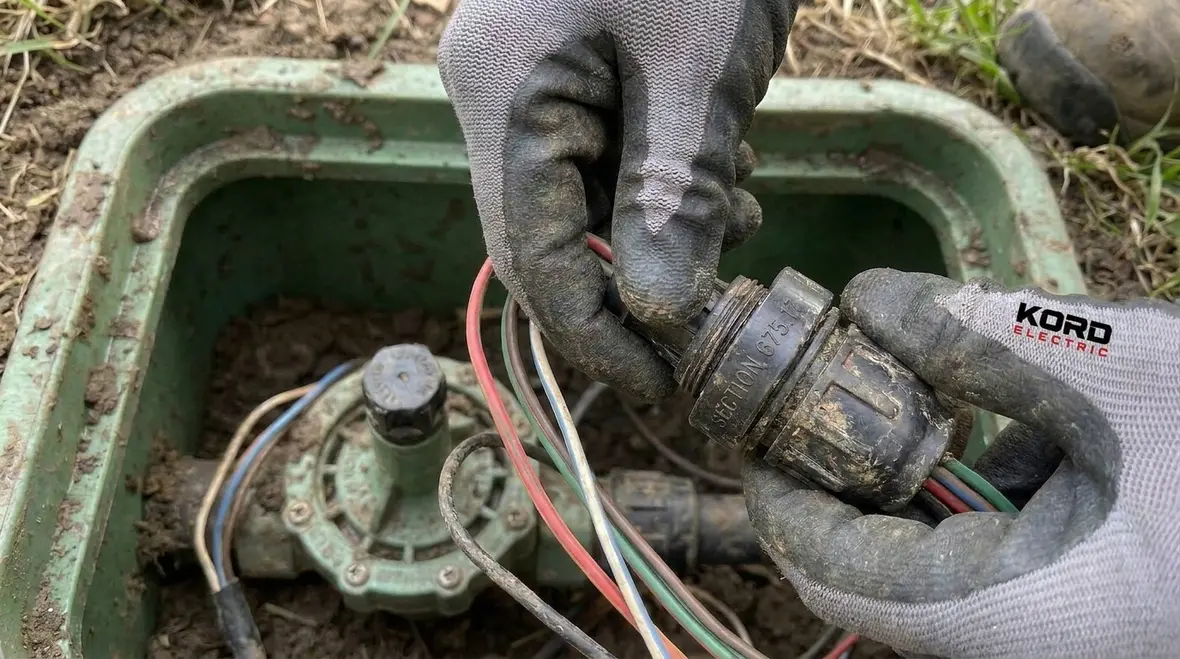
On paper, NFPA 70 Section 675.17 irrigation connectors look like a set of targeted requirements. Out in the field, those requirements decide whether an irrigation controller keeps working through hot seasons, cold snaps, and constant watering cycles. We routinely see connections that technically “carry current” but ignore intent: mismatched connector ratings, incomplete sealing, or terminations done in a hurry to keep a schedule moving.
Our service staff closes that gap by translating the section into practical questions: Is this connector rated for burial or outdoor use? Does it stay protected from direct spray and soil moisture? Does the method of joining conductors align with the insulation type and conductor size? When those answers line up with the code, the connection behaves like a reliable link, not an eventual trouble ticket.
Where irrigation interfaces with the rest of the system
Irrigation does not live in a vacuum. It ties into panels, control systems, and in some facilities, building management platforms. That is why our team treats NFPA 70 Section 675.17 irrigation connectors as one node in a much larger network of safety decisions. When we coordinate the connection points, grounding, protection, and routing, the result is a cleaner overall system that stands up to weather, landscaping activity, and continuous operation.
Step by step: how we ensure NEC-aligned installation
When others call us late, the story often begins the same way. Something flickers, a zone fails, a panel shows a nuisance protection trip, or a contractor says “the connections looked fine.” Then we arrive, and we treat the issue as a disciplined diagnostic process.
Here is how our expert service staff typically ensures NEC aligned installation across commercial and industrial facilities.
- We review the plan and the spec to identify what standards apply to the system and where requirements hit hardest.
- We map the wiring path so we understand exposure to water, mechanical stress, and how the system will operate over time.
- We verify components so irrigation connectors and related parts match the job conditions and the code intent.
- We perform installation checks for torque, seating, routing, and protection against moisture and damage.
- We test and document so the facility team receives traceable records, not vague promises.
We also coordinate with facility managers and other trades. That matters because irrigation wiring often crosses landscaping boundaries, utility access points, and equipment spaces. Therefore, we keep our work aligned with how the property operates, not just how the drawings read.
From design intent to field reality
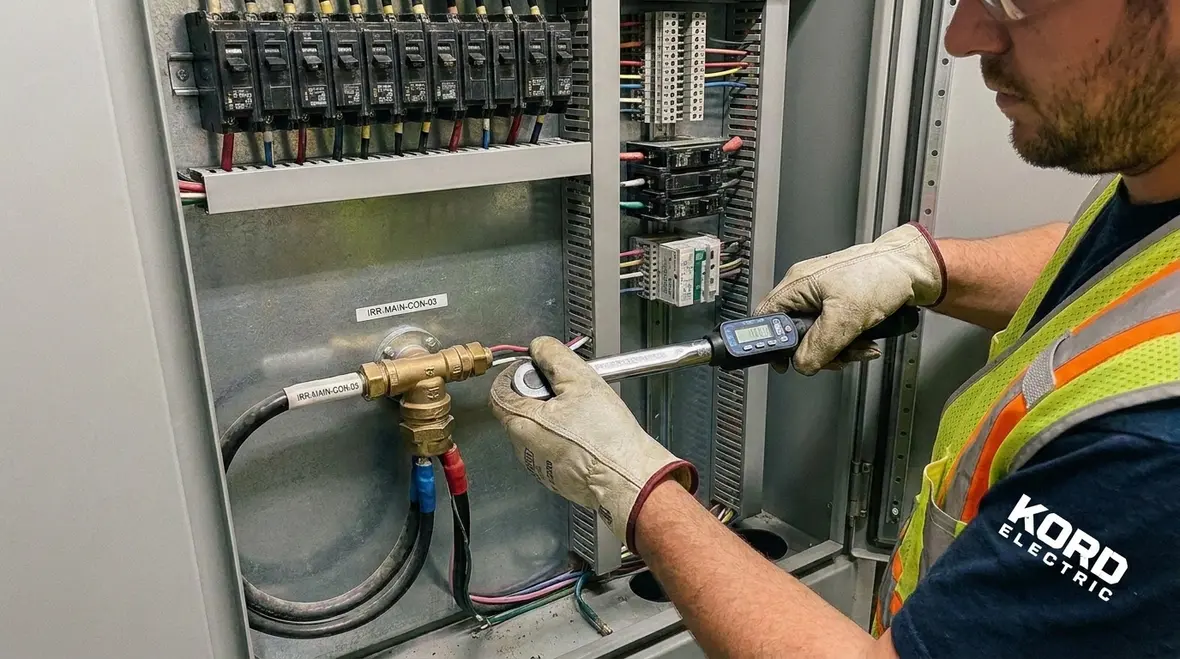
Our team treats drawings and specifications as the starting point, not the finish line. During installation, we confirm that junction boxes, raceways, and terminations really match both the NEC and the designer’s assumptions. If the routing changed in the field or site conditions differ from the plan, we adjust the approach while still honoring NFPA 70 Section 675.17 irrigation connectors requirements. That might mean upgrading a connector type, adding protective enclosures, or reworking a splice that did not pass visual or mechanical checks.
Because we work across many commercial and industrial facilities, we also apply lessons from broader NEC topics, such as grounding, overcurrent protection, and moisture protection, which we cover in other resources like What Is NFPA 70? Understanding the National Electrical Code. This keeps irrigation wiring aligned with the same disciplined standards we apply to main distribution and critical loads.
Key NEC themes that impact commercial and industrial facilities
Beyond irrigation connectors, the NEC carries themes that show up across many facility systems. Our technicians focus on these themes because they protect people, assets, and uptime.
Protection and grounding: The NEC requires proper grounding and protection so faults get handled quickly and safely. That includes appropriate devices and methods that match the risk profile of each circuit.
Correct conductor sizing and termination: Many issues start with the “almost right” conductor or a termination that does not deliver a stable connection. Over time, heat and vibration can turn “almost right” into “why did this fail now?”
Moisture and physical protection: Commercial sites deal with weather exposure, cleaning routines, and outdoor paths. As a result, the installation must control water ingress and avoid damage to wiring and connections.
Inspection readiness: Our team prepares work so it can pass review. We treat documentation like a safety item. When inspectors ask for details, we can show what we installed and why.
Why small connectors reflect big safety culture
The way a facility treats irrigation connectors often mirrors how it treats the rest of its electrical system. If small outdoor connections get ignored, it usually means documentation is thin, maintenance is reactive, and inspections feel like a scramble. When those same facilities shift to a culture that treats every connection as part of a safety chain, performance improves almost everywhere, from lighting to process equipment.
That is why we often connect irrigation discussions to broader reliability topics such as surge protection, emergency power, and data-driven design. In our blog resources like Preventing Commercial Power Surge Damage in Buildings and Data-Driven Electrical Design for Commercial and Industrial, we show how disciplined decisions at every level reduce avoidable downtime.
Common failure patterns we see in irrigation wiring
Our technicians have seen the same failure patterns repeat, which is helpful because it lets us prevent issues rather than chase them. And yes, we have heard the jokes. People say, “The wire worked yesterday.” Yesterday is adorable, but electrical parts do not run on nostalgia.
Here are common problems we uncover during service calls at commercial and industrial facilities.
- Loose or mismatched connections that degrade due to heat cycling and vibration.
- Water exposure that enters at weak points, especially where routing and enclosure choices do not match the environment.
- Incorrect connector selection where the connector does not fit the application, even if the installer used the “same style” as before.
- Improper cable routing that causes abrasion, pinching, or stress at termination points.
- Missing documentation so future maintenance cannot confirm what was installed and what was tested.
As a result, we recommend that property teams treat irrigation wiring as part of the same safety culture as other facility electrical systems. Once a facility builds that mindset, the work improves across seasons, contractors, and budgets.
From “good enough” to NEC-ready
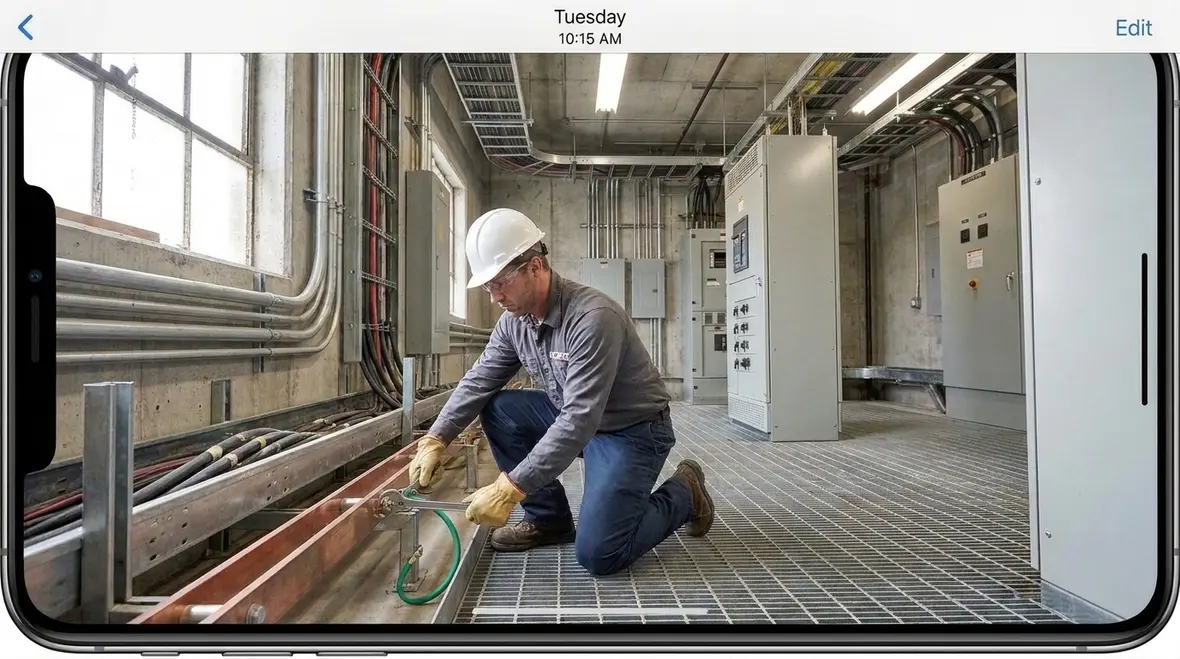
Many of the failures we repair started with a “good enough” mindset. A connector was close to the right rating. A splice was almost sealed. A box was nearly weather-tight. Over time, temperature swings, soil movement, and moisture finish the job that rushed installation began. NFPA 70 Section 675.17 irrigation connectors aim to eliminate that guesswork by defining what “good enough” must actually look like in practice, but it still takes disciplined technicians to apply the rule correctly.
By contrast, NEC-ready installations use connectors suited for their environment, properly torqued terminations, verified sealing surfaces, and routing that keeps wiring away from unnecessary mechanical stress. When we revisit those sites years later, the irrigation system may still need updates, but the connectors themselves rarely appear on the failure list.
Why “compliance” should mean performance and uptime
Many teams think code compliance only matters during an inspection. However, for commercial and industrial operations, the real value shows up in performance. When the installation follows NEC direction, the facility experiences fewer failures, fewer shutdowns, and less unplanned downtime.
We also explain this to facility owners in plain terms. The NEC is written for safety, but safety and reliability align. For instance, a properly made connection resists overheating and corrosion. Meanwhile, correct routing reduces strain and abrasion. Therefore, good compliance decisions help systems last longer and behave more predictably.
That is why our approach connects design intent to field execution. We do not just “install.” We coordinate, verify, and test so the facility team can operate with confidence.
Connecting irrigation work to broader NEC planning
When we advise facility teams on NFPA 70 Section 675.17 irrigation connectors, we also encourage them to step back and look at the bigger picture of NEC planning. That might mean checking whether outdoor control wiring aligns with surge protection strategies, or confirming that standby power designs keep critical irrigation controls alive during utility events if the landscape depends on precision watering.
In related Kord Electric resources like Emergency Power for Business Continuity Design and Data Center Power Quality for Reliable Uptime, we show how resilient electrical infrastructure supports everything from IT rooms to life safety loads. Irrigation may not seem as critical as a server rack, but for campuses, healthcare sites, and high-visibility properties, reliable watering still supports operations and reputation.
FAQ for NFPA 70 irrigation connectors and commercial compliance
Facility managers, contractors, and property teams often raise the same questions when they realize irrigation wiring sits under the NEC umbrella. We encourage those questions, because they provide a natural bridge between day-to-day operations and long-term safety.
In plain words: yes, we take it seriously, because irrigation wiring still represents electrical risk. If the facility relies on dependable irrigation operation, we want every connection to perform like it was built for the long run.
Call Kord Electric for NEC aligned electrical work
If your commercial or industrial facility needs irrigation wiring support, connector verification, or full NEC aligned electrical service, we are ready. Kord Electric sends trained technicians and expert service staff who explain what they find, what it means, and how we correct it. We coordinate with your team, test the work, and document it so you can maintain confidence year round. Do not wait for the next failure season. Contact us today and let us protect your uptime.
Planning beyond irrigation: full facility support
While NFPA 70 Section 675.17 irrigation connectors may be today’s focus, our support stretches across your entire electrical infrastructure. From automated lighting and surge protection to data center redundancy and emergency power, we help facility teams align everyday decisions with the latest NEC direction. That includes regional projects where owners look for dependable Los Angeles County electrical services backed by a team that understands both the big-picture strategy and the small details hidden in junction boxes.
When you are ready to move from “it still works” to “it is built to work right,” we can help you review existing installations, plan upgrades, and coordinate future expansions. Whether that means revisiting irrigation wiring, tightening documentation, or rethinking how NEC updates affect your next project, our team stands ready to walk the site, explain the options, and deliver work that supports safety, reliability, and uptime.
Next steps for NFPA 70 NEC compliance
If you suspect that your irrigation connectors, outdoor control wiring, or other site systems might not fully align with the NEC, the best next step is a focused evaluation. We can begin with visible checks at panels and controller locations, sample inspections at representative valve boxes, and documentation reviews to see how past work was recorded. From there, we outline corrective actions, prioritize them based on risk, and integrate them into your broader maintenance or project plan.
Our goal is simple: help your facility operate like the NEC intended—safe, steady, and ready for inspections—while keeping irrigation and related systems reliable enough that your team can stop worrying about “yesterday” and start trusting tomorrow’s operation.


