
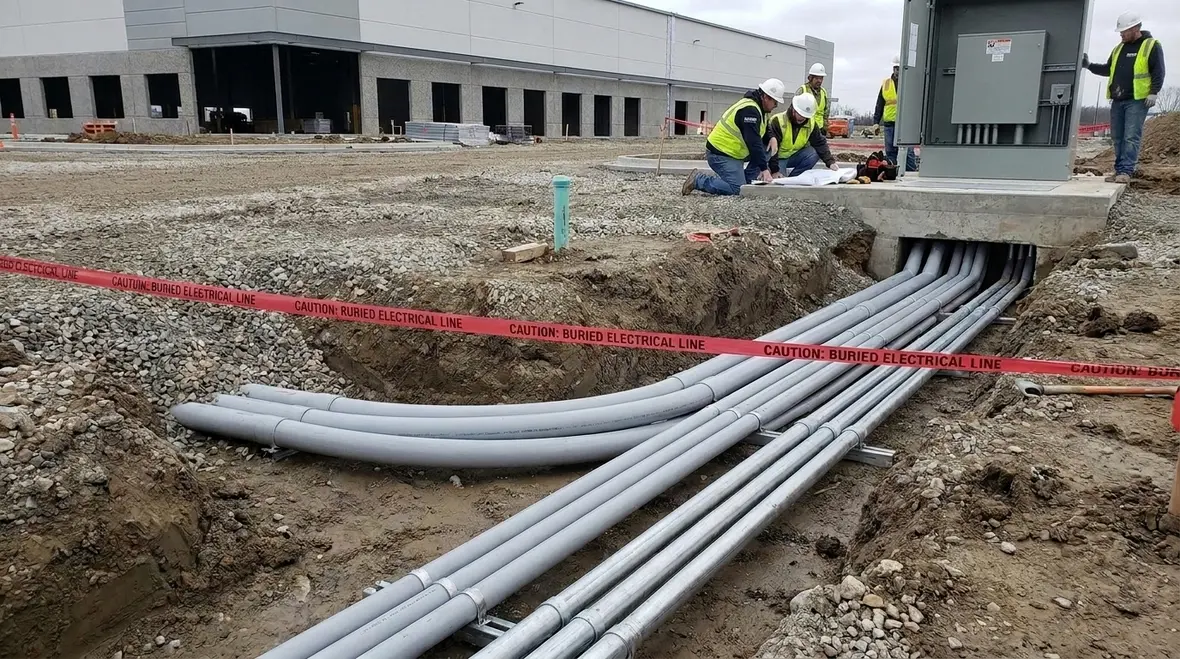
NFPA 70 Section 230.30 Guide for NEC Underground Service
NFPA 70 Section 230.30 sets the tone for how a NEC underground service installation should be built when power moves below grade. At Kord Electric, we see too many projects where the schedule stays calm, but the trench work does not. And once the conduit is buried, mistakes stop being “temporary” and start becoming “expensive forever.”
In this article, we focus on best practices tied to NFPA 70 Section 230.30, and we explain them in plain language. Our expert service staff and field technicians walk job sites every week, so we speak from what we have actually found in commercial and industrial facilities and major property buildings. They also help customers understand the why, not just the what.
Yes, some of this can feel like reading the world’s most serious comic book. Still, when we follow the rules, the electrical system stays reliable, safe, and ready for real-world loads.
Planning the underground path before anyone breaks ground
Before a trench is cut, we treat the alignment like a map for a long delivery. First, we confirm where the service equipment will land and where the utility will connect. Then we check the site for conflicts like future construction, drainage patterns, and existing utilities. In commercial and industrial environments, that “busy underground” is often the real boss fight.
Next, we plan for protection and routing. Section 230.30 expects the underground raceway and conductors to be installed with methods that prevent damage. Therefore, we do not rely on guesswork or “we will fix it later.” We coordinate with civil teams so the conduit has a stable grade and can handle maintenance access points.
At this stage, our technicians also check the practical details that clients sometimes miss. For example, they confirm conduit size, bends, and pulling conditions. They also verify that the installation supports the needed conductor requirements without forcing sharp turns that make pulling feel like tugging a stubborn TV cable through a wall.
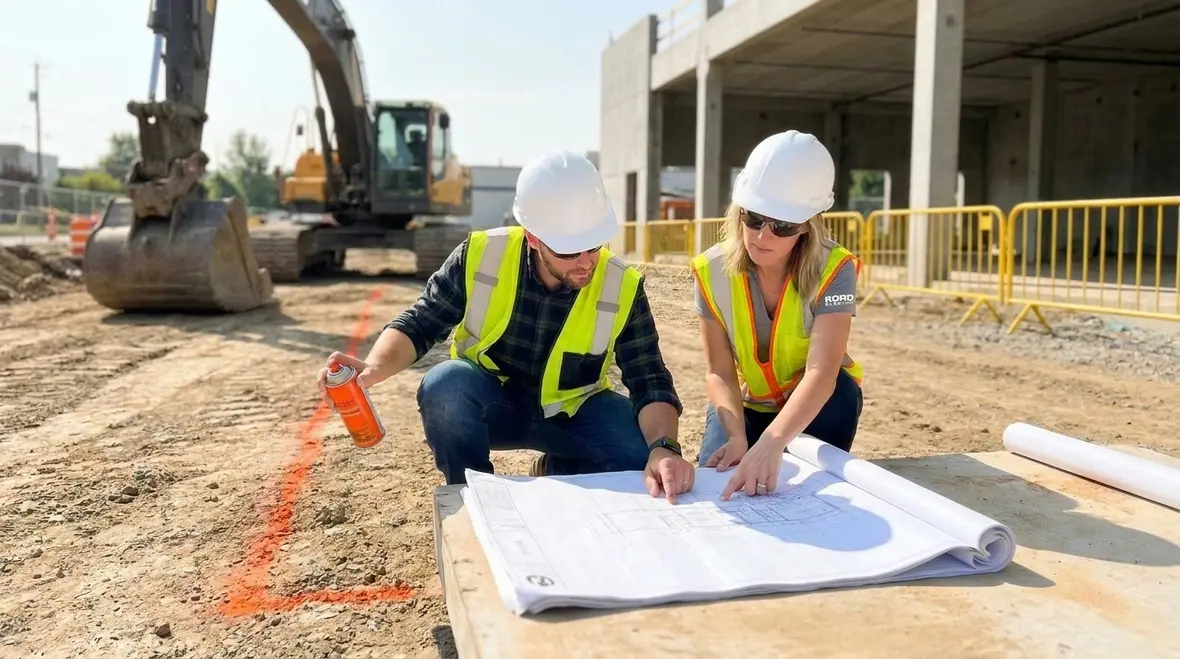
Thoughtful early planning also creates room for better code coordination. When we outline the path and the installation method ahead of time, it becomes much easier to align with the broader National Electrical Code framework. For facility teams who want a deeper background on how NFPA 70 shapes high-level decisions before projects start, resources like Understanding NFPA 70: The National Electrical Code Explained For 2026 make a helpful companion read alongside this underground-focused guide.
Conduit, cover depth, and how we protect the system
Protection is not a vibe, it is a requirement. With underground runs, the key goals include shielding the raceway from physical damage, managing moisture, and keeping the system intact over time. Under NFPA 70 Section 230.30, we focus on correct installation methods, including how raceways are placed and supported.
Cover depth matters because it helps guard the raceway from loads, digging, and accidental impacts. Also, in major property buildings, you often see parking areas, service lanes, and equipment pads above the service route. As a result, the burial depth and routing decisions must match the site conditions.
We also pay attention to where conduit transitions occur. For instance, the area near the service equipment can see different stresses than deeper runs. Therefore, our field team uses proper fittings and ensures the route does not become a weak point for damage or water entry.
And yes, water finds shortcuts. It always does. So we make sure the installation method limits water migration and prevents corrosion risk where it can be controlled.
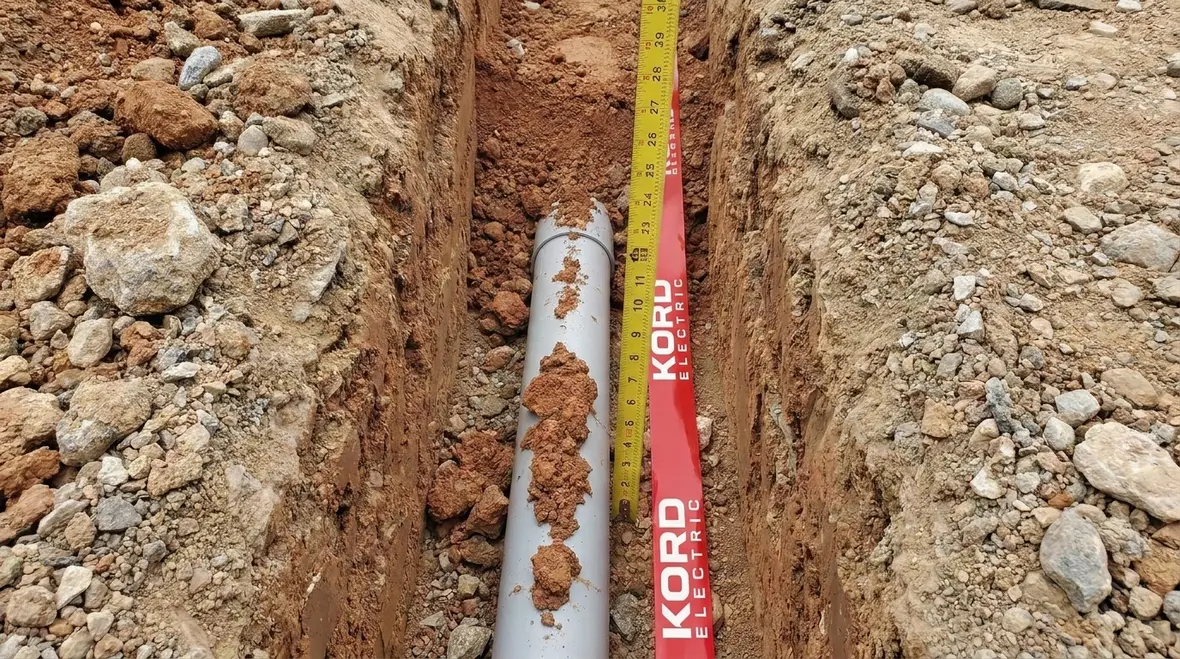
In commercial and industrial environments, these protection details are rarely just “nice to have.” They tie directly into uptime, equipment protection, and how well future projects can coexist with the existing service. When conduit depth, backfill, and route selection all align with realistic site use, you gain a system that behaves quietly in the background instead of demanding attention every time someone needs to dig a footing or add a drain line.
Wet locations, groundwater, and joints that do not fail quietly
Underground service installation lives in environments that do not care how great your paperwork looks. When the ground has moisture, and when the site experiences seasonal groundwater changes, we have to anticipate wet conditions.
To support safety and reliability, we ensure the raceway and conductor systems meet the intent of Section 230.30 for underground installations. That means correct sealing methods where appropriate, proper handling of couplings and joints, and careful workmanship so the system does not become a slow leak of trouble.
Our expert service staff explains this clearly to facility managers: water does not need to “flood” the system to cause harm. Even steady dampness can contribute to insulation stress and corrosion, especially around metal components and connection points.
Additionally, we take a close look at transitions between underground and aboveground sections. If the physical design supports proper sealing and strain control, the system performs better during future maintenance. If it does not, maintenance teams end up troubleshooting issues that should have been prevented during installation.
When conditions stay damp year-round, our crews also pair underground practices with broader code awareness. Guidance from resources like Kord Fire’s overview NFPA 70: All About The National Electrical Code (NEC) reinforces how electrical and fire safety interact underground, especially when groundwater, corrosion, and life safety systems share the same real estate below grade.
Conductor installation, pulling tension, and long-run reality
Even if the trench is perfect, conductors still have to be installed correctly. Therefore, we treat the pulling process like a controlled operation, not a last minute sprint.
In commercial and industrial facilities, runs can be long, and bends can add resistance. Consequently, we plan pulling routes, verify lubrication practices, and select appropriate pulling equipment. Our technicians also verify that the conductor’s rated characteristics match the environment and installation method.
When conductors pull with excessive tension, insulation and jacket performance can suffer. It might not fail on day one, but it can age faster under heat and stress. In other words, the system can “look fine” while quietly losing durability, like a superhero who smiles through fatigue.
Moreover, we coordinate pulling with schedule constraints. If the pulling plan does not align with the site timeline, teams sometimes rush. We do not rush. We adjust sequencing so the installation remains careful and consistent, even when the job site feels like a busy kitchen during a holiday rush.
On complex sites, we also tie this pulling plan into broader building electrical design. Articles such as Kord Electric’s guide on building electrical system design and planning power for commercial facilities highlight how conductor sizing, voltage drop, and route selection all connect. When underground segments and aboveground distribution get planned together, the pulling strategy becomes part of a larger, stable system instead of a scramble on installation day.
Labeling, inspection readiness, and the documentation that saves time
Underground work often gets buried, literally and figuratively, before the full story gets told. So we prioritize documentation early and keep it clear for the people who will operate the facility later.
Accordingly, we prepare for inspections by keeping records of conduit runs, connection points, conduit type, and installation practices that align with NFPA 70 requirements. We also make sure the system is laid out so inspectors can verify what matters without guesswork.
Additionally, major property buildings and large campuses benefit from labeling. Our team supports labeling standards so future electricians can locate pathways and understand service equipment relationships. This reduces downtime and helps keep routine work from turning into an archaeological dig.
Our technicians explain these points to building owners and general contractors because they know the real cost comes later. When documentation is solid, maintenance becomes planned. When it is not, troubleshooting becomes a guessing game, and nobody enjoys that, not even the people who claim they do.
Clear identification becomes even more powerful when it lines up with other NEC-driven details, such as the terminal identification expectations described in Kord Electric’s article on NFPA 70 Section 200.10 terminal identification requirements. When underground services, terminations, and labeling all tell the same story, inspectors and maintenance teams can move faster and safer.
Coordination with utility requirements and site conditions
NFPA 70 Section 230.30 covers underground service installation requirements, but the utility side still matters. Therefore, we coordinate with the serving utility and align the conduit route, connection location, and handoff requirements with what the utility expects.
At the same time, we coordinate with civil and structural needs. For example, service routes can cross areas affected by paving schedules or equipment pads. Also, changes in the site plan can shift grades or introduce new obstructions after trench planning.
To avoid that mismatch, we keep the communication loop active. Our expert service staff checks field conditions and confirms that the installed path still matches the design intent. If the site changes, we adjust the plan and document the outcome so the electrical system stays safe and code-aligned.
This coordination matters most in commercial and industrial facilities because those sites often operate on tight windows. A small routing conflict can create a big delay, and we aim to prevent delays from becoming the theme of the project.
Because underground work often interacts with exterior feeders and outside disconnects, we also reference related guidance from other NEC sections covered in the Kord Electric blog. Articles on topics such as NFPA 70 Section 225.30 and the NEC number of outside supplies or NEC clearances from buildings rules in Section 225.19 help owners see how the service path, outside equipment, and building edge all need to work together, not in isolation.
Common mistakes we see and how we prevent them
Experience teaches lessons faster than any textbook. We see repeat patterns, especially in projects where underground planning receives too little attention.
Weak routing decisions: Conduit routes that do not account for future construction or drainage create conflicts. We prevent this by verifying site plans and utility locations early.
Improper protection: Conduit that sits too close to areas with load or digging risk creates damage exposure. We prevent this by matching burial depth and protection methods to site conditions.
Rushed pulling: Excess tension during conductor installation can reduce long term performance. We prevent this by planning pulls, limiting bends where possible, and controlling the process.
Missing documentation: When records are unclear, maintenance teams lose time and sometimes remove barriers that should not need removal. We prevent this by labeling and keeping inspection ready documentation.
When our technicians explain these risks to clients, we keep it practical. We connect the mistake to real outcomes: more troubleshooting, longer downtime, and higher costs. And while nobody wants a surprise headline, electrical failures tend to find the spotlight.
We also encourage facility leaders to pair this underground-focused checklist with other code-aware planning tools. For example, Kord Electric’s high-level NEC explainers and Kord Fire’s educational resources give teams a wider frame for how Section 230.30 interacts with topics like GFCI protection, multiwire branch circuits, and exterior feeds. That big-picture view helps prevent the classic problem where one “small” underground shortcut quietly undermines a much larger safety strategy.
FAQ
Conclusion and call to action
When a facility needs dependable power, we treat underground service work like a long term investment, not a buried afterthought. Kord Electric brings experienced technicians, careful planning, and code aligned execution grounded in NFPA 70 Section 230.30 best practices. If you are building, upgrading, or troubleshooting an underground service for a commercial or industrial project, we invite you to contact us. We will review the site, explain the steps in clear terms, and help you move forward with confidence.
For owners and managers who want to see how this underground work fits into a broader support model, our dedicated Los Angeles County electrical services overview explains how Kord Electric helps facilities plan, build, and maintain electrical systems across the region. From NEC-driven design and installation to testing, documentation, and troubleshooting, our team connects what happens below grade with the performance you expect everywhere else in the building.


