
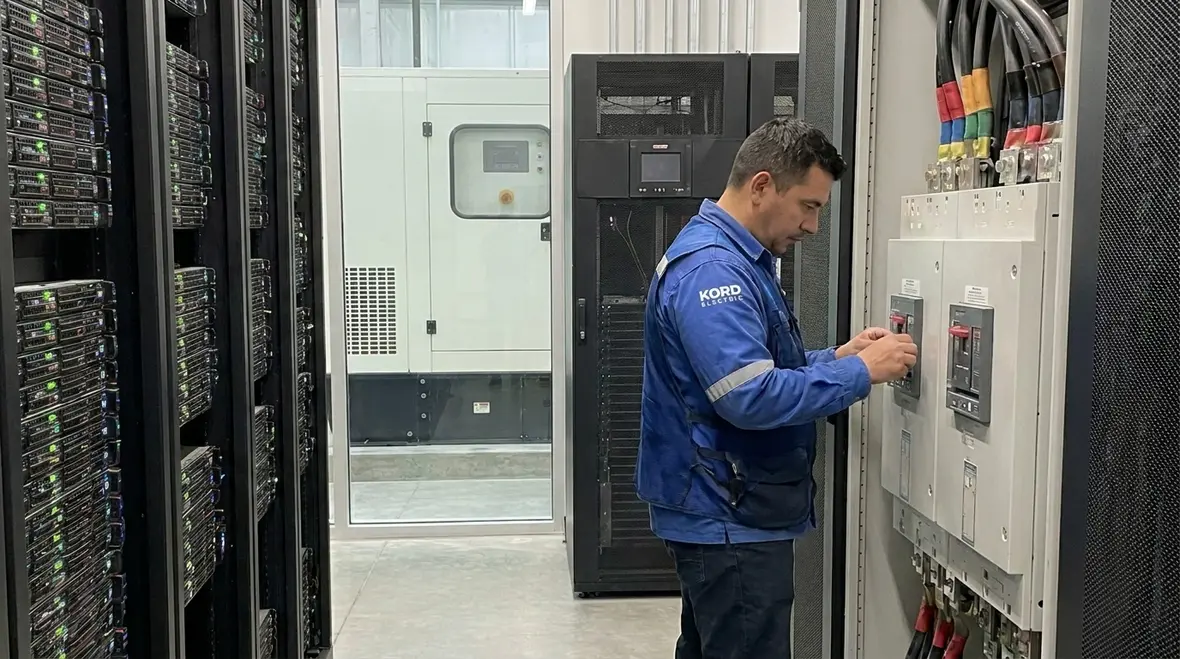
Data Center Power Uptime Strategies to Prevent Downtime
Data Center Power Uptime: Strategies to Prevent Electrical Downtime that keep your servers breathing
In our work at Kord Electric, we often hear the same concern from facilities and IT teams. “If the lights flicker, what happens to our uptime?” This is where Data Center Power Uptime: Strategies to Prevent Electrical Downtime becomes more than a slogan. We help commercial and industrial facilities, and major property buildings, protect the power chain that your business depends on every second.
We also know downtime does not show mercy. And while servers may have “self healing” software, electricity still has to arrive in the right form, at the right time, to the right place. So, we build practical plans that reduce risk, control failure points, and keep power stable. Yes, we take this seriously, but we never forget that stress makes people punch holes in dashboards. We would prefer you keep the walls intact.
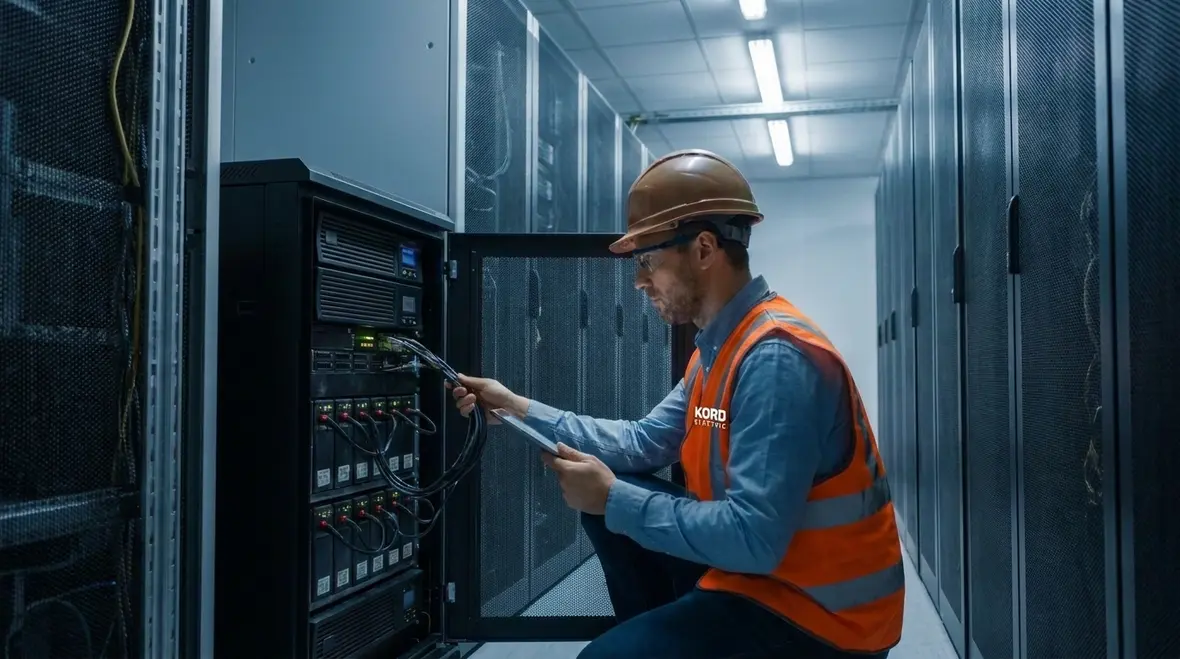
Power uptime starts with how we design redundancy
Third party studies and our own job site experience show that uptime is not just about having backup power. It is about how we connect it. Therefore, we look at redundancy as a system, not a wish. Our expert service staff explains this clearly to facility leaders: when one component fails, the next component must pick up the load without drama, delays, or unnecessary switching.
We often reference what we wrote in our blog about redundancy for very high uptime targets, including resources like our guide on data center power redundancy for maximum uptime and our companion article on data center power redundancy for high availability. The point is simple. You build more than one path. Then you make those paths behave predictably during faults. In practice, that means planning for multiple power feeds, careful transfer schemes, and smart distribution so loads do not bottleneck at the wrong node.
To keep things calm, we also outline the “failure ladder.” When we map the ladder, we identify what fails first in real life. Then we strengthen that step first. That approach usually saves time and cost instead of spending money on the last problem you would notice during a real outage.
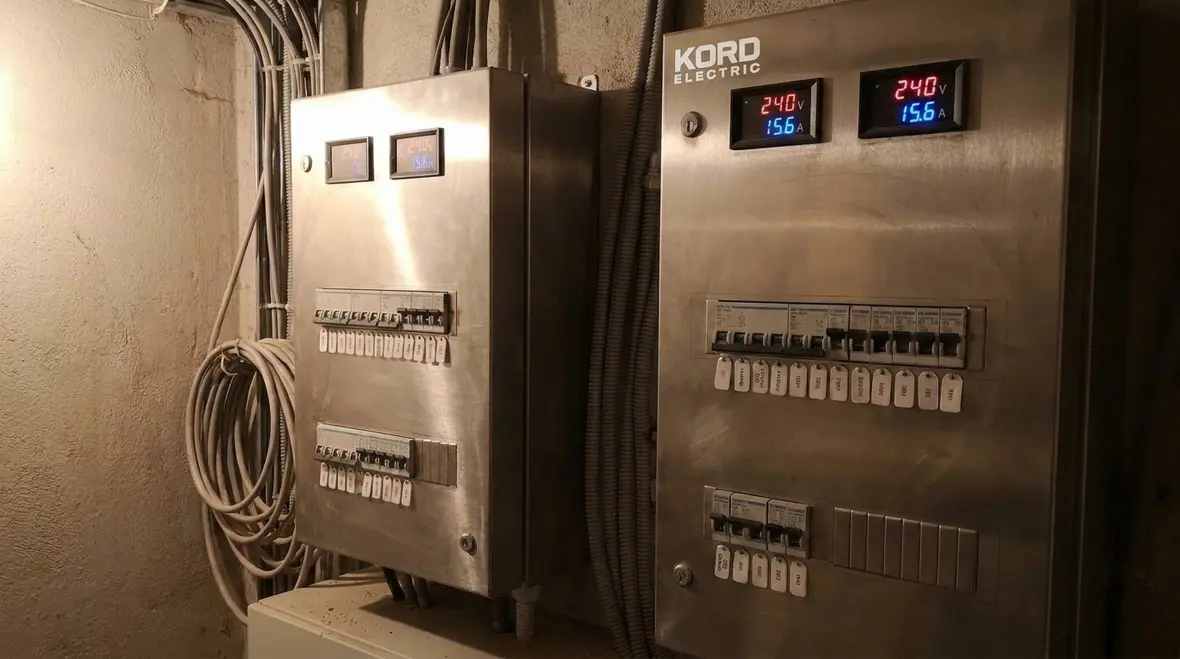
How we prevent electrical downtime at the source, not just at the backup
Backup power matters, of course. However, our technicians plan for something even more important. They reduce the number of things that can cause a power event to begin with. As a result, the foundation becomes steadier. That includes targeted maintenance, clean switching, and correct protection settings.
Here is what we look for in commercial and industrial environments. We verify electrical distribution health. We check for loose terminations, insulation damage, abnormal heat, and signs of aging on critical switchgear. Then we confirm protection devices trip within their design intent, not like a mood ring.
Next, we align power quality with actual load needs. Sensitive loads hate surprises. So, we evaluate harmonics, voltage variation, and transient response. We do not guess. We measure. Then we recommend solutions that match the risk level and operating schedule of each major property building.
And when teams ask whether they need constant monitoring, we tell them what we tell everyone. If a problem can stay hidden until it hurts, it will hide until it hurts. Therefore, we push for monitoring that alerts early, not after the smoke show has already started.

Connecting uptime strategy with distribution and infrastructure design
For many facilities, preventing electrical downtime at the source also means aligning with broader infrastructure decisions. That is why we often pair these reviews with insights from our articles on data center electrical requirements for uptime and data center electrical distribution design for reliability. When protection settings, distribution topology, and real-world operating patterns all line up, power events become rare and far less dramatic.
Where UPS, generators, and transfer systems must work as one team
Most downtime stories sound the same at first. Something fails, then power transfers, then chaos arrives. We prevent that chaos by forcing each layer to perform as part of one plan.
Our expert service staff explains it like this. UPS systems cover the gap during transfers and ride through short interruptions. Generators take over for longer events. Transfer systems must switch in the right sequence and with the right timing. When any of these parts do not coordinate, you get load drops or unstable behavior.
So we focus on coordination testing. We validate transfer logic in the real configuration, not only on paper. Then we confirm that critical loads follow the intended priorities. For example, life safety, IT racks, storage, and network gear may use different paths and sequences, and we respect that reality.
In the field, we also test how the system behaves when switching under load conditions, while staying within safe operating limits. In other words, we make sure the system does not only look good during a calm rehearsal. We want it to perform when the lights act like they have a personal grudge.

Using uptime strategy as a bridge between design and operations
To keep UPS, generators, and transfer systems behaving like a team instead of a collection of parts, we lean on the same discipline we outline in our data center uptime strategy with power reliability and redundancy guide. There, and in this work, the goal is the same: predictable transfers, verified paths, and a realistic operating playbook that your technicians can actually follow when the clock is ticking.
What our technicians do to keep testing practical and safe
Testing feels easy in theory. Yet in a real commercial and industrial facility, testing can disrupt operations if it is not planned well. Therefore, our process stays structured and safety focused.
First, our technicians review system documentation and historical events. Then we schedule work around peak business windows and maintenance cycles. We also verify that test modes align with the facility’s change management plan, because surprises never help anyone’s mood.
Next, we conduct test steps in a way that checks more than one idea at a time. We look at UPS health, battery condition, charger behavior, generator readiness, and transfer timing. We confirm communication paths and alarms so the right people know what happened and when.
Then we close the loop with clear results. We provide recommendations tied to risk, not generic checklists. And we make sure your operations team can understand the “why,” not just the “what.”
Our team’s style is calm and direct. If a component shows stress, we explain what it means for uptime. If a procedure needs adjustment, we show it. If we find a gap, we propose an action plan that fits the building’s operational needs.
Keeping maintenance aligned with your uptime targets
When facilities formalize testing and maintenance into a program instead of one-off events, their data centers tend to see fewer surprises. That is why we often pair this practical testing work with long-term planning similar to what we describe in our data center power scalability and growth planning article. The same discipline that keeps growth under control also keeps testing practical and aligned with your uptime commitments.
Designing for high availability in major property buildings
Major property buildings often combine offices, data rooms, mechanical spaces, retail tenants, and critical services in one footprint. That means the power plan has to handle more than one kind of load. So, we treat the building like a system with priorities.
We evaluate load classification early, then we design distribution so critical loads stay protected even when non critical loads shed during events. That approach prevents the system from chasing every watt like it is trying to catch a runaway shopping cart.
Next, we consider physical separation and routing. We aim to reduce the chance that one event damages multiple power paths. That includes separation of raceways and careful placement of components. Then we confirm that the electrical room layout supports safe maintenance access.
We also address operational discipline. Even great hardware fails when people do not follow the right procedures. Therefore, our expert service staff helps teams build clear operating playbooks for abnormal conditions and planned maintenance windows.
Finally, we support continuous improvement. We review maintenance results, power quality data, and event logs. Then we refine the strategy over time, because uptime goals do not stay still. They evolve as loads grow and systems age.
Linking building-wide reliability with data center uptime
When a data center lives inside a major property, we integrate its needs with broader building reliability topics covered in resources like our data center electrical infrastructure essentials guide. We also make sure clients understand how their uptime strategy relates to services we provide across Los Angeles County electrical services, so the entire site—from core power to tenant spaces—follows a consistent reliability playbook.
FAQ: Data center power uptime and electrical downtime prevention
Ready to protect uptime like a business priority?
If your commercial or industrial facility depends on stable power, we help you reduce downtime risk with a plan that supports high availability. At Kord Electric, our technicians and expert service staff review your power chain, coordinate redundancy, and validate that UPS, transfers, and generators work together under real conditions. Then we guide maintenance and testing so your team knows what to expect before an event happens. For facilities that want a deeper technical foundation, we can connect these efforts with specialized planning like data center power redundancy for 99.999 uptime and broader data center electrical solutions for reliability and uptime, so short-term fixes align with long-term goals.
If you are ready to treat uptime like the business priority it really is, our team can help you map the next step—from assessing existing power paths to planning upgrades or new builds with reliability baked in from the start. Call us today to review your current setup and map the next practical step toward stronger Data Center Power Uptime: Strategies to Prevent Electrical Downtime for your operation.
To move from ideas into action, we also offer dedicated commercial and industrial services that support everything from code-compliant installations to urgent troubleshooting. Explore how our Los Angeles County electrical services connect directly to your uptime strategy, including data center power, building distribution, and ongoing maintenance support tailored to complex facilities.


