Emergency Power Backup for Offices That Works
Why emergency power backup for offices keeps the workday alive
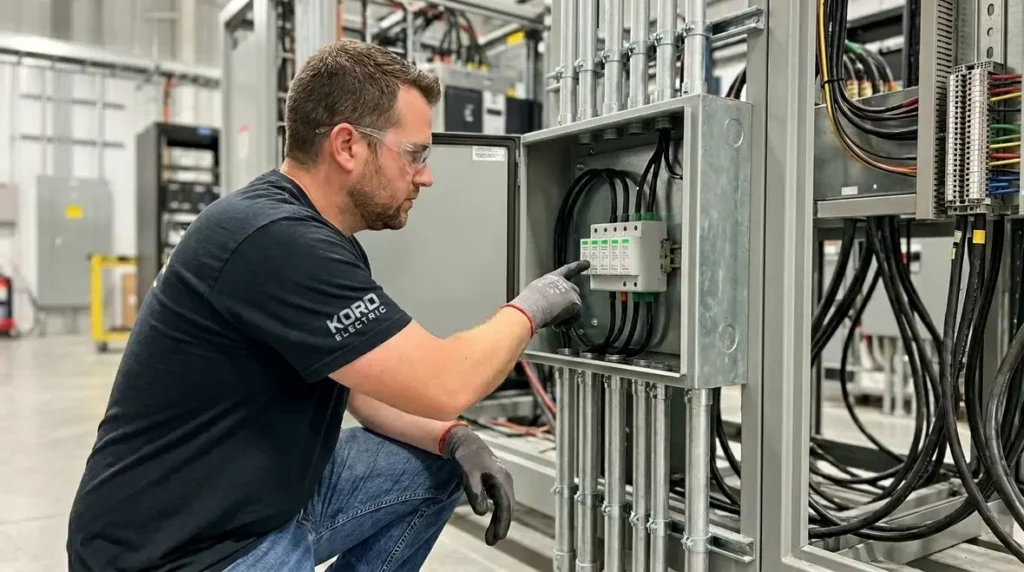
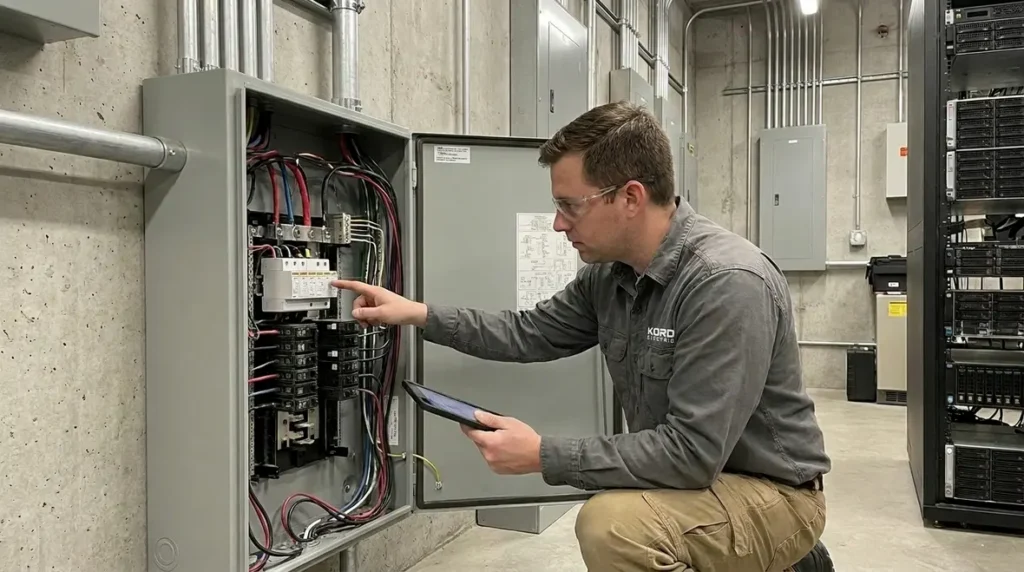
At Kord Electric, we plan for the moment when the lights flicker, the computers hesitate, and the whole office suddenly feels like it is trapped in a bad movie montage. That is why we install and support emergency power backup for offices built for commercial and industrial facilities and major property buildings. When power drops, our systems help critical loads stay on, so teams can keep working, serving, and protecting data. In this article, we explain how we design uninterrupted operations, what standards matter, and how our technicians guide facility teams through each step. And yes, we also remind clients that generators do not run on optimism. They run on proper design, safe controls, and real maintenance.
Critical loads: what must stay on, and why

In real commercial environments, not every device needs power when the utility grid falters. However, some loads absolutely must remain active to prevent shutdowns, losses, or safety issues. First, we help property and facility leaders identify the critical load list during planning. Then we select transfer methods and backup capacity that match actual needs, not wishful thinking.
Our expert service staff typically starts with these priorities:
- Life safety systems like emergency lighting and fire alarm interfaces
- Security equipment including access control, monitoring, and perimeter cameras
- Business continuity loads such as servers, network gear, and core communications
- Operational processes like elevators, pumps, refrigeration, and industrial controls where delays create risk
Next, we confirm the electrical behavior of these loads. Even when wattage looks reasonable, motor starting and control circuits can draw surge current. Therefore, we model demand and starting characteristics before we size equipment. This is where many generic approaches fail. They treat power like a simple on or off switch, when in truth it is more like a controlled choreography.
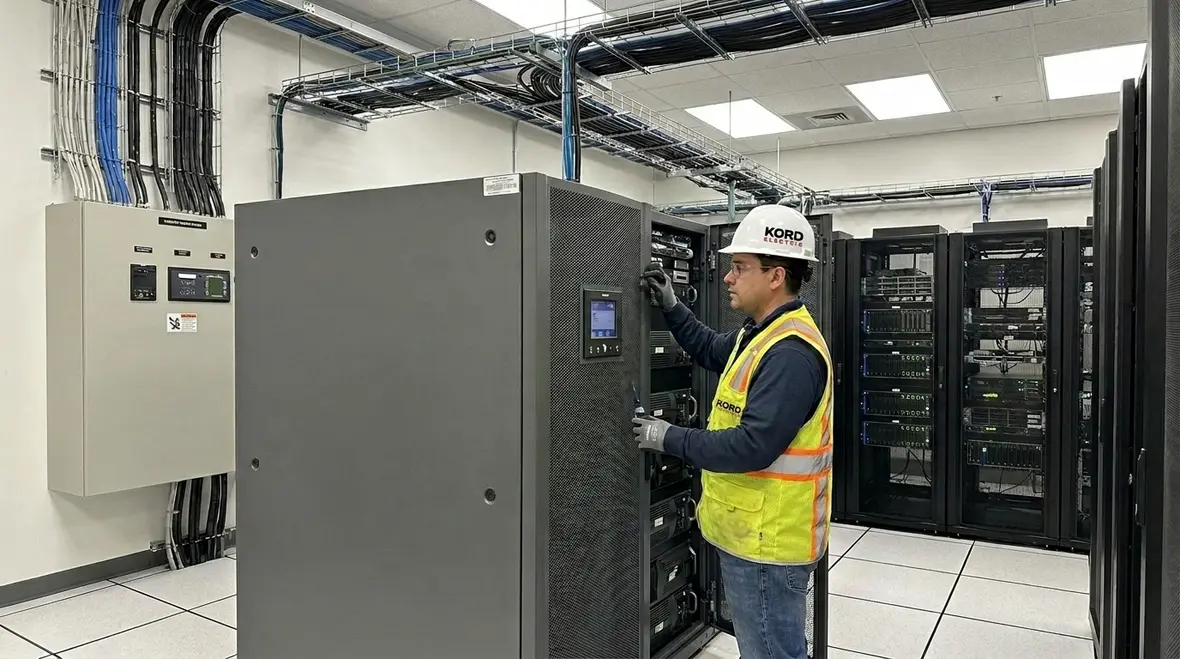
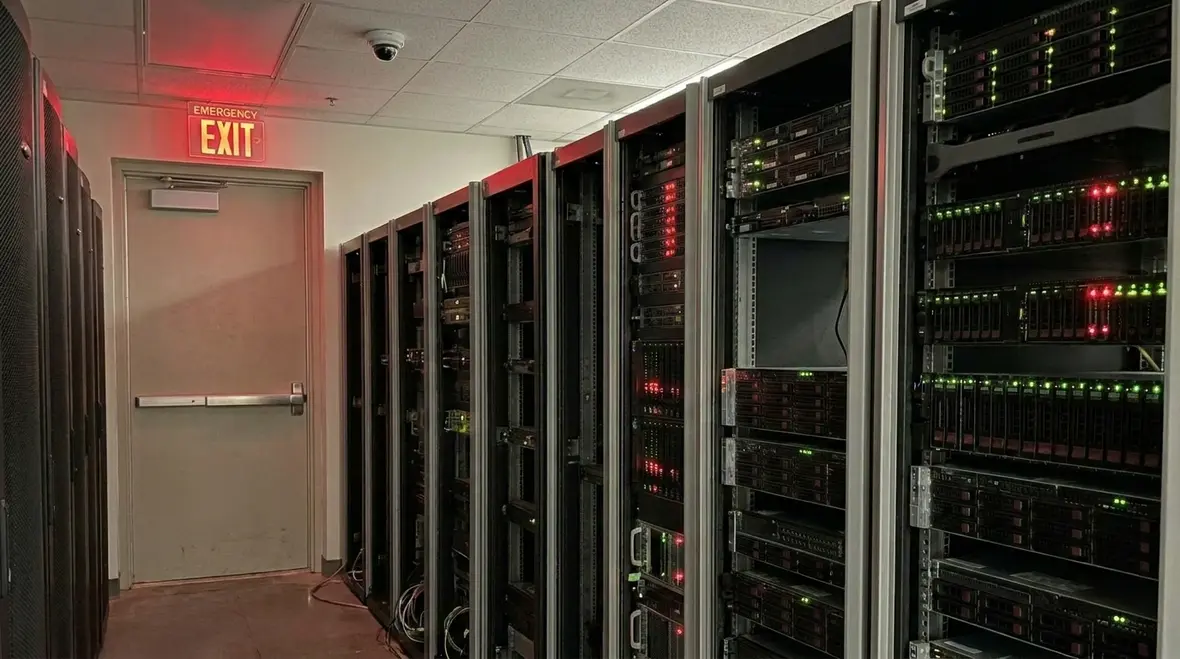
This is also where our broader commercial expertise supports better decisions. For facilities that depend heavily on IT, our team often references insights from our data center electrical requirements for uptime guidance to make sure critical computing and communications gear receives the same level of protection and planning that dedicated server environments expect.
How our technicians build an uptime plan, not just a generator
When clients call us, they usually ask about backup power equipment. Yet the real question is whether the facility will operate smoothly during transitions. That is why our technicians explain the system as a whole: source, transfer, distribution, monitoring, and maintenance routines. We do not just drop in a unit and hope for the best. We build a plan that supports uninterrupted office operations.
To do that, we focus on four areas:
- Transfer design: determining how the system shifts from utility to backup with minimal downtime
- Load coordination: ensuring sensitive electronics and control panels see stable power
- Protection and selectivity: keeping faults contained so one problem does not knock out everything
- Monitoring: capturing alarms, run hours, and maintenance triggers before issues become failures
Then we walk facility teams through the operational reality. For example, some offices only need backup for short outages, while others require longer endurance. Additionally, certain loads tolerate brief interruptions differently. So we set expectations and configure the system accordingly. Our goal is calm operation during a stressful moment, not confusion with a blinking warning light that looks like it came from a spaceship.
For larger portfolios and complex commercial campuses, we often integrate emergency power backup solutions into broader reliability programs. That may include coordinating with structured commercial and industrial electrical maintenance plans so emergency systems, normal distribution, and critical branch circuits all support the same uptime goals.
NFPA 70 and code planning that supports real-world safety
In commercial and industrial projects, compliance cannot be an afterthought. We reference the electrical code requirements because they directly shape how systems are installed, protected, and labeled. Our team has also shared guidance in our blog on Understanding NFPA 70: The National Electrical Code Explained for 2026, because the details help facility owners understand the “why” behind safe design choices.
In practical terms, code-based planning affects:
- Wiring methods and protection strategies
- Switching and transfer arrangements that maintain safe segregation
- Grounding and bonding to reduce shock and equipment damage risks
- Panel labeling and documentation that helps maintenance teams respond quickly
Most importantly, we help clients avoid the trap of treating compliance as paperwork. Instead, we treat it as an engineering checklist. When the power fails, the system should respond in a safe, predictable way, with protection that works the first time. And in the business world, “predictable” is the kind of word everyone should like, because chaos is expensive.
That same mindset extends beyond emergency circuits. When we install or upgrade normal lighting and distribution in offices, we align with resources like our lighting installation code compliance guide so everyday operation, after-hours egress, and backup scenarios all follow the same standard of care.
Transfer and distribution strategies that prevent ugly surprises
Backup systems succeed or fail at the handoff. Therefore, we pay close attention to transfer equipment and distribution design so the facility does not experience nuisance trips, unstable voltage, or unnecessary shutdowns. Additionally, we consider how the electrical system behaves during steady operation, startup of motors, and re-transfer when utility returns.
Here are the strategies our technicians evaluate during design:
- Automatic transfer settings that match the facility’s required timing and safety needs
- Staged load pickup to prevent excessive starting demand from overloading the generator
- Voltage and frequency stability considerations for sensitive IT and control equipment
- Coordination of breakers to keep short circuits from expanding into broad outages
To make this easier to picture, we often explain the concept using two views. On the left, we focus on the facility experience: smooth transition, stable operations, minimal downtime. On the right, we focus on the electrical engineering view: protection settings, load inrush behavior, and control logic. These two perspectives must agree. Otherwise, the system might pass testing and still misbehave under real conditions, which is the worst kind of “technically correct.”
Two important views we review together
Facility experience: what staff and equipment feel during utility loss and restoration
Electrical behavior: what happens inside the transfer, panels, and protection layers
As part of that electrical behavior, we pay careful attention to labeling and coordination. An emergency panel that nobody can decipher in a hurry is not doing you any favors. That is why we align backup distribution with the principles in our electrical panel labeling best practices guide, so critical circuits are easy to identify when seconds matter.
Maintenance, testing, and the human factor
Even the best emergency power backup for offices will not protect operations if it never runs. That is why we build maintenance and testing programs for commercial and industrial facilities and major property buildings. Our expert service staff helps teams schedule tests, confirm performance, and keep documentation current.
We also account for human behavior. When an outage happens, people panic first and troubleshoot later. However, prepared facilities handle events with clear steps. Therefore, we help clients define roles and communication flow before something goes wrong. That way, staff do not waste time searching for the one control switch that is always located exactly where it is not obvious.
Maintenance typically includes:
- Fuel system checks and supply verification based on runtime needs
- Load bank or test procedures that confirm the system handles real demand
- Battery inspection and charger verification for control power
- Visual inspection of transfer equipment, connections, and protective devices
Then we document results and recommend adjustments when we spot drift. Over time, equipment changes and loads evolve. Renovations add devices. IT upgrades multiply servers. Therefore, we encourage periodic load reviews so the backup system stays aligned with the facility’s current reality.
For many clients, it is helpful to treat emergency power as one chapter in a larger reliability story. Resources like our guide on hidden electrical risks in commercial buildings show how unseen issues in normal distribution can quietly undermine even a well-designed backup system if they are never inspected or maintained.
FAQ
What we recommend for commercial teams planning next
If your facility runs on uptime, you deserve a backup plan that works the first time. Kord Electric helps commercial and industrial clients and major property buildings design, install, and maintain backup systems that support critical load continuity, safe transfers, and reliable performance. Next, we suggest you schedule a site review with our technicians so we can confirm your load list, verify capacity, and match the design to the way your operation actually runs. Reach out to us today, and let’s keep your office running, even when the grid decides to play games.
For organizations in Southern California, this often begins with a review of existing infrastructure, current outage history, and how well present-day operations match the original design assumptions. If your building has grown, been renovated, or taken on more technology-heavy tenants, it may be time to revisit both your normal distribution and your emergency power backup for offices so they reflect today’s loads instead of yesterday’s floor plans.
If you operate in or around the region, our dedicated Los Angeles County commercial electrical services team can integrate emergency power planning with broader upgrades, maintenance, and code-driven improvements so your entire system moves forward together, not in disconnected pieces.