
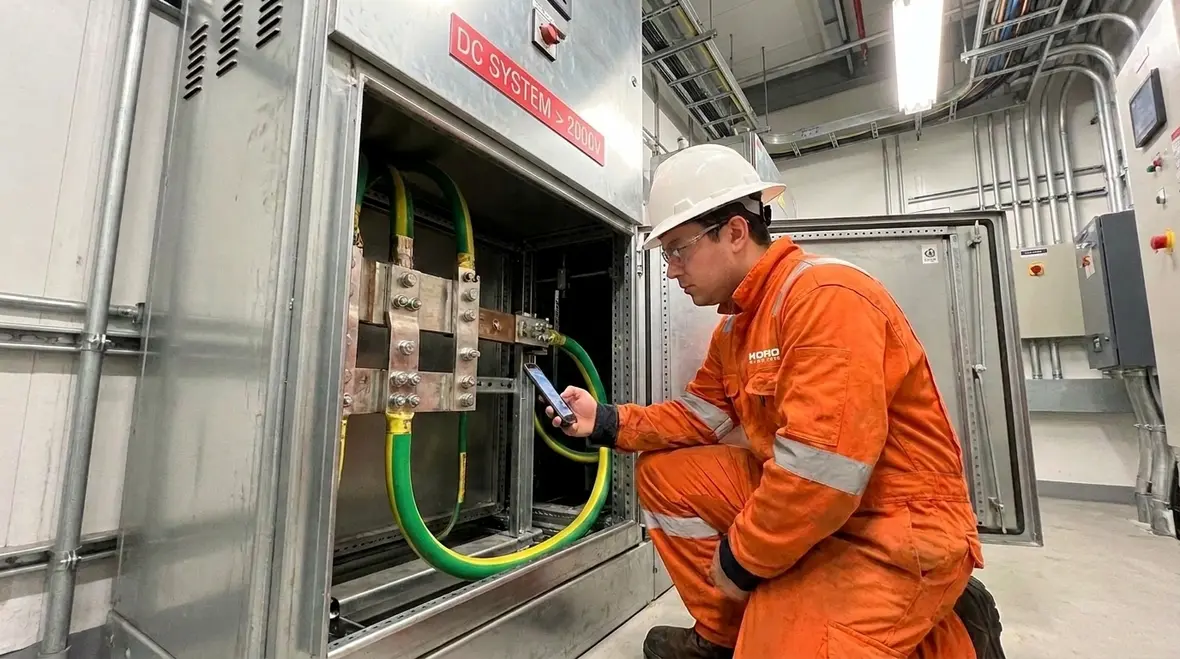
NFPA 70 270.162 NEC DC Grounding 2 kV
NFPA 70 Section 270.162 tackles a serious reliability issue: NEC DC grounding 2 kV in DC systems that exceed 2,000 volts. At Kord Electric, we help commercial and industrial facilities meet these requirements with safe design, correct installation, and steady field support. Our expert technicians explain the “why” behind the rule, because rules that no one understands tend to get ignored, and ignoring code is a bit like skipping roof repairs because “rain will handle it.” It usually does not. When your facility runs critical equipment, grounding decisions affect safety, fault behavior, and how fast protection devices do their job. So we walk through what 270.162 requires, what it means in real projects, and how our team supports major properties from planning to closeout.
If your facility team wants a broader code foundation alongside this specific section, our related resource Understanding NFPA 70, the National Electrical Code Explained for 2026 helps connect high-level NEC concepts to real equipment, panels, and field decisions. That way, NFPA 70 270.162 does not sit in isolation; it fits into a bigger picture of grounding, bonding, and protection strategies across your site.
1. What NFPA 70 270.162 really demands for DC systems
NFPA 70 Section 270.162 addresses DC systems over 2 kV that must be grounded. In plain terms, if a DC system goes beyond that voltage level, the code expects a grounding approach that reduces dangerous rise in voltage and supports predictable fault conditions. Therefore, it is not just a “nice to have.” It is a requirement meant to limit hazards that can show up when insulation fails, conductors become energized, or a system experiences a sustained fault.
Additionally, this section ties into the larger NEC mindset: protect people and equipment by controlling electrical conditions during abnormal events. While some may think grounding is only for lightning or “safety,” grounding also shapes how the system behaves long enough for protective devices to respond. And when protective devices respond late, that is when problems get expensive, loud, and dramatic, like a superhero origin story that nobody asked for.
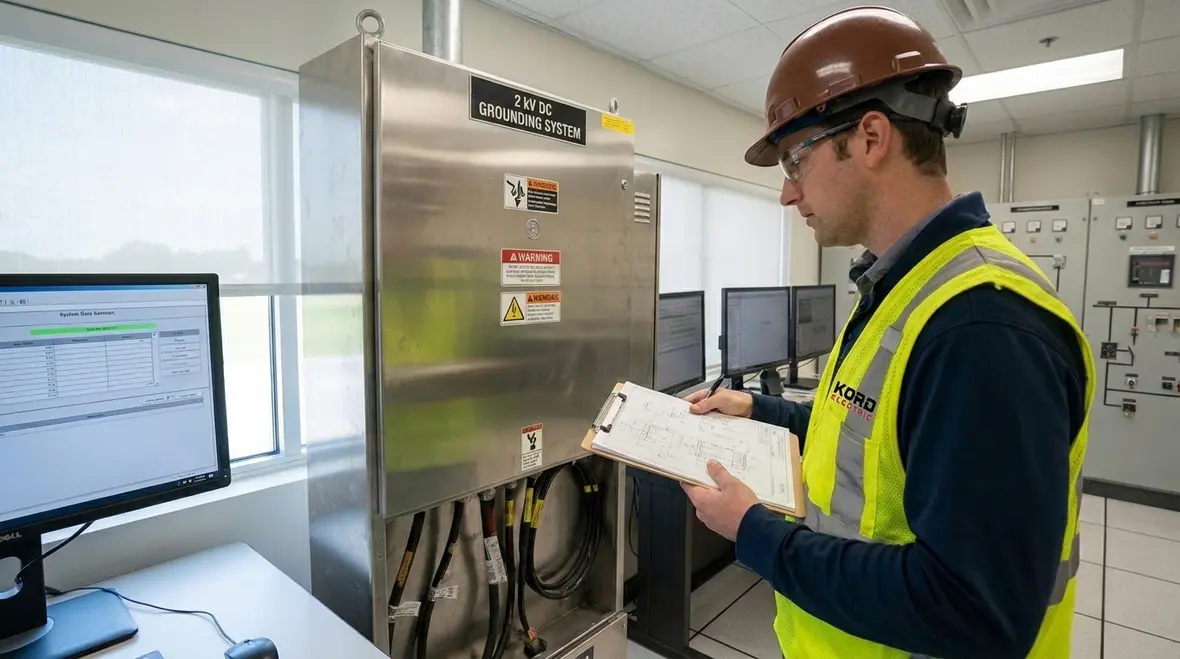
In commercial and industrial environments, this requirement shows up in projects ranging from DC distribution for process lines to high-voltage DC links that support specialized equipment. When Kord Electric designs around 270.162, we treat it as a core safety requirement, not a checkbox. We review the system topology, the insulation strategy, and how the fault current will behave relative to grounding and bonding paths. That way, the written rule becomes a set of practical decisions about conductor sizes, terminations, and protection settings.
2. Why grounding matters when DC voltage exceeds 2 kV
DC behaves differently than AC, and that difference matters. Even so, the goal stays consistent: keep touch and step potentials within safer bounds and ensure fault paths are clear. In a DC system, a fault can cause unusual voltage conditions because current flow depends on circuit design and the presence of a defined return path. When there is no proper grounding, the system can “float,” and then voltage levels can rise beyond what equipment insulation can tolerate.
Furthermore, proper grounding helps limit the risk to personnel. It also supports better coordination with overcurrent protection and protective relaying, especially in industrial settings where downtime and damage have a direct cost. Meanwhile, Kord Electric technicians explain grounding in a way that project teams can use during design reviews, commissioning, and operating procedures.
For facilities that are already planning upgrades or new construction, articles like our What Is NFPA 70? Understanding the National Electrical Code guide help building owners understand how DC grounding fits into larger code changes coming into focus for 2026 and beyond. When the NEC direction is clear, it becomes easier to budget for grounding improvements instead of treating them as unplanned surprises.
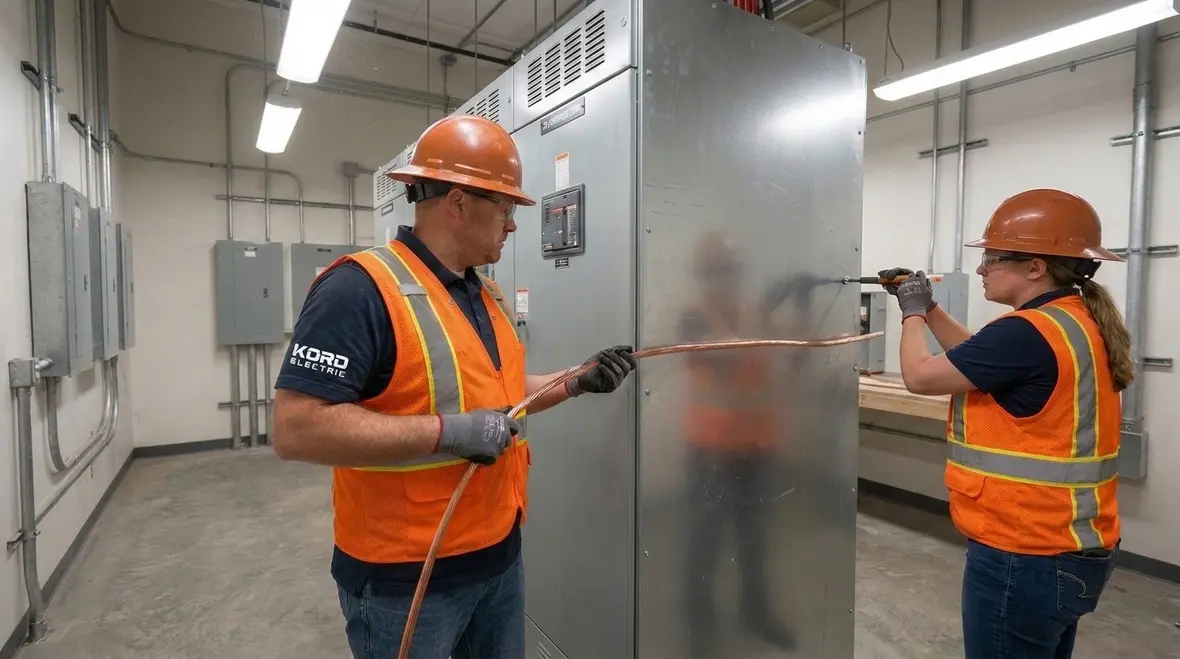
When a system runs critical loads, such as data infrastructure, process equipment, or life safety interfaces, uncontrolled DC faults can be brutal. Voltage that quietly drifts above ratings can stress insulation until it fails in a way that is anything but quiet. That is why we treat NEC DC grounding 2 kV as part of the reliability toolbox: it protects people, equipment, and uptime by controlling how the system behaves when something goes wrong.
3. How NEC DC grounding 2 kV should be implemented in the field
When we install grounding systems for NEC DC grounding 2 kV, we treat it like an engineered system, not a collection of parts. First, we confirm the system voltage and operating scheme, because the grounding approach must align with how the DC source and distribution are designed. Next, we identify the grounding conductor requirements, bonding points, and how the system return will connect to the grounding electrode system.
Then we look at how faults will be cleared. Even if the equipment looks fine during normal operation, field reality includes loose connections, aging insulation, and unexpected loads. So we build for fault behavior, not just for “it powers on.” Our expert service staff also verifies that labeling, routing, and terminations match the design intent and the NEC expectations.
Importantly, we work with commercial and industrial facilities and major property buildings, so our process supports coordinated shutdown planning, safe work practices, and minimal disruption. After all, a grounding improvement project that requires a full site panic is not an improvement. It is a circus.
On many projects, our team also coordinates DC grounding decisions with emergency power plans. For example, when a facility invests in backup systems similar to those described in our Emergency Power for Business Continuity guide, we make sure that DC grounding, bonding, and protection schemes support stable operation during both normal and emergency modes. That alignment helps keep critical systems predictable even during utility outages and transfers.
Design collaboration that keeps NEC intent intact
For facility engineers and project managers, the most effective way to implement 270.162 is to bring grounding decisions into early design conversations. Instead of pushing DC grounding questions to the end of the one-line diagram, we treat them as a design driver. That includes agreeing on how the DC return is referenced, how electrode systems interface with the broader site grounding grid, and how testing will prove performance before the system goes live.
4. The grounding pathway, bonding, and fault clearing you must plan for
Grounding is not a single decision. It involves the pathway from fault current to a defined reference, plus bonding that keeps exposed conductive parts at safer potential. Accordingly, we pay close attention to where bonding is needed, how it connects to enclosures, and how conductors interconnect across system boundaries. This helps ensure that when something fails, it fails in a way that protection devices can detect and clear.
Moreover, in DC systems, the way you bond can impact relay behavior and equipment stress. If the grounding arrangement is incorrect, you may see nuisance alarms, delayed clearing, or equipment damage. Therefore, we recommend that owners and facility engineers treat grounding design as a key part of the electrical concept, not a late-stage add-on.
In practice, Kord Electric technicians explain this with simple examples during walkdowns. We show how a defined return path changes measured voltage during abnormal conditions, and we connect those results to the protection strategy. Because when the team understands the pathway, they make better decisions during construction, testing, and maintenance.
For large facilities that rely on advanced protection schemes or have sensitive equipment like data centers, we often tie these discussions to redundancy and power quality. Resources such as our Data Center Power Redundancy for Maximum Uptime and Data Center Power Quality for Reliable Uptime articles show how grounding and bonding choices quietly support uptime targets in mission-critical environments.
Bonding across equipment and system boundaries
We pay special attention to boundaries where different systems meet: DC equipment to metallic raceways, cable tray to building steel, enclosures to racks, and DC distribution to AC interfaces. Small gaps or inconsistent bonding at these boundaries can leave pieces of equipment at different potentials during a fault. That is how a minor defect becomes a dangerous touch potential instead of a cleanly cleared event. Proper bonding keeps those boundaries aligned with the NEC intent and with the facility’s safety goals.
5. Common mistakes we see in large facilities and how we prevent them
Even well-funded projects sometimes miss details, especially when teams juggle multiple contractors or fast schedules. We frequently see these issues in commercial and industrial environments:
Incorrect assumptions about grounding scope: Teams treat DC grounding like AC grounding, then they discover the rule applies differently once the system exceeds 2 kV.
Loose or poorly prepared terminations: A “looks tight” connection is still a problem if the conductor prep does not match the specification.
Bonding gaps across equipment boundaries: Enclosures, racks, or cabinets can end up at different potentials during faults.
Routing choices that ignore future maintenance: When grounding paths are hard to access, troubleshooting slows down and safety suffers.
Testing that does not match the design: If continuity, resistance, or verification steps do not align with the grounding plan, you may pass a test and still fail the requirement.
As we work, our team transitions from plan to field with clear documentation and careful workmanship. In addition, our technicians communicate through the process so that facility stakeholders understand what was done and why. That reduces confusion during handoff, and it helps operations teams maintain the system correctly over time.
For owners who want to prevent these gaps across an entire project, not just at the DC grounding level, we often recommend pairing NEC 270.162 work with better planning tools. Our Electrical Supply Planning Tools for Construction Projects article explains how aligning design requirements with supply and installation schedules helps keep details like grounding terminations, bonding hardware, and test equipment from becoming last-minute headaches.
Documentation and training that stick
We also see a softer, but equally important, mistake: treating documentation and training as optional. When drawings, labels, and reports do not clearly show how NEC DC grounding 2 kV is implemented, future modifications can quietly break compliance. Kord Electric closes that gap with as-built updates, maintenance notes, and walk-throughs that explain how the system should behave. That way, the next team that works on your equipment does not have to guess which conductor does what during a DC fault.
6. Coordinating grounding with protection systems and commissioning
Grounding does not work alone. It pairs with protective devices, relays, and shutdown logic. Therefore, the most dependable systems plan the grounding scheme alongside protection coordination. When we support projects, we review how the DC system is protected and how it clears faults. Then we align grounding installation and verification with those goals.
Commissioning matters too. After installation, we verify the grounding pathway and confirm continuity and bonding integrity. Additionally, we coordinate documentation so that the owner can maintain compliance and operate confidently. Our expert service staff explains test results in straightforward terms, so maintenance teams can spot drift and correct issues early.
And yes, sometimes it feels like commissioning is the final boss of electrical work. Like in a classic video game, if you skip the last level, you do not get credit, and the next system update becomes a nightmare.
The same discipline we apply to emergency systems testing, described in our Emergency Power System Testing Protocol Guide, also applies to NEC DC grounding 2 kV. Routine verification—rather than one-time tests—keeps grounding performance aligned with design intent, even as the facility evolves.
Protection studies and settings that match the real world
When we coordinate grounding with protection, we review time-current curves, relay settings, and coordination studies with a specific question: “Does this still behave correctly if the fault follows the real grounding path we installed?” If the answer is no, we adjust. That practical loop between design and field reality is where NEC 270.162 stops being theory and becomes a working safety system.
7. Staying compliant through ongoing maintenance for major properties
Commercial and industrial facilities do not stay static. Equipment upgrades happen. Panels get moved. New loads get added. Therefore, grounding systems deserve attention after initial installation. We recommend owners create a maintenance plan that includes periodic inspections of bonding points, conductor terminations, and accessible components of the grounding system.
Furthermore, our team supports facilities with expert field service and practical guidance. We focus on keeping the DC grounding scheme healthy, especially where the system runs critical functions. If a facility treats grounding like background noise, that is when it becomes an emergency broadcast.
To align with national electrical code thinking and continuous safety improvements, Kord Electric follows NEC principles and supports modern facility standards. For teams that want a broader code foundation, we also share resources that explain the NEC in a clear, practical way through our related content and guidance.
If your building is in Los Angeles County or nearby and you are planning upgrades that touch DC systems, emergency power, or major distribution, our Los Angeles County electrical services team can integrate NEC DC grounding 2 kV requirements into a full project plan. That way, grounding, protection, and construction schedules all move in the same direction instead of fighting each other.
FAQ
Conclusion
At Kord Electric, we support commercial and industrial facilities that need dependable compliance with NFPA 70 Section 270.162. We help you get the NEC DC grounding 2 kV right through clear design support, expert installation, and commissioning that holds up during real-world operation. If you are planning a new DC system or upgrading an existing one, contact us. Our technicians and service team will review your project and map out the grounding approach so your facility runs safer, longer, and with fewer surprises.
When your site is ready to move from concept to action, our regional electrical services team can coordinate NEC DC grounding 2 kV with broader upgrades, emergency power, and distribution changes so you do not have to manage those pieces alone. Grounding is one of those investments that rarely wins awards, but it quietly keeps your building out of the headlines—and that is exactly how critical infrastructure should behave.


