Preventive Maintenance for Industrial Switchgear
Why preventive care is the quiet hero of switchgear uptime
At Kord Electric, we start with Preventive maintenance for industrial switchgear because it helps facilities avoid failures before they become emergencies. In our experience, a few planned checks can protect years of service life, reduce downtime, and keep power delivery steady for commercial and industrial sites and major property buildings.
Just to be clear, we are not chasing paperwork for fun. We are chasing reliability. And yes, switchgear can look calm while the real trouble brews inside. Like a blockbuster movie sequel you didn’t ask for, problems often show up late, fast, and with expensive special effects.
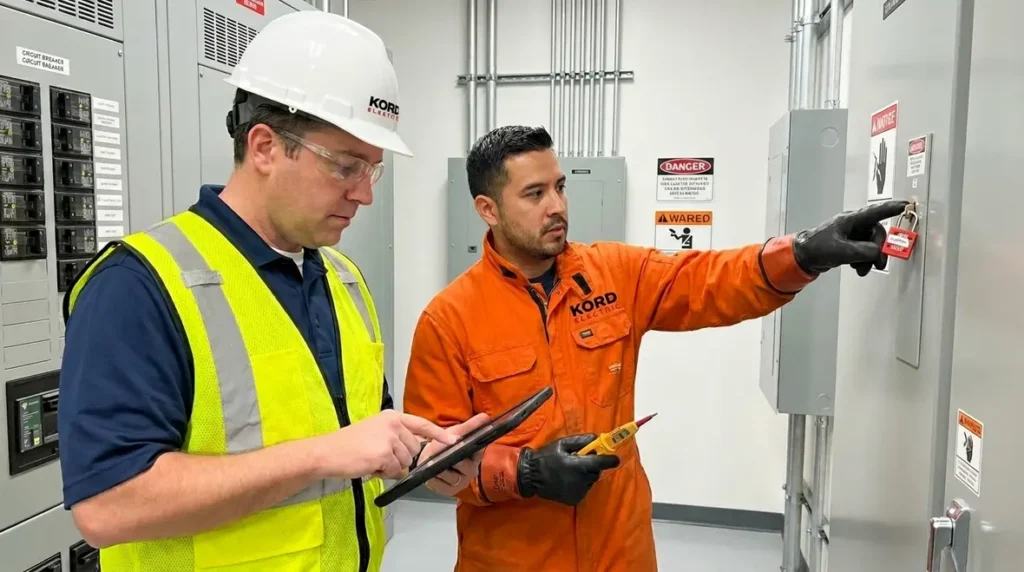
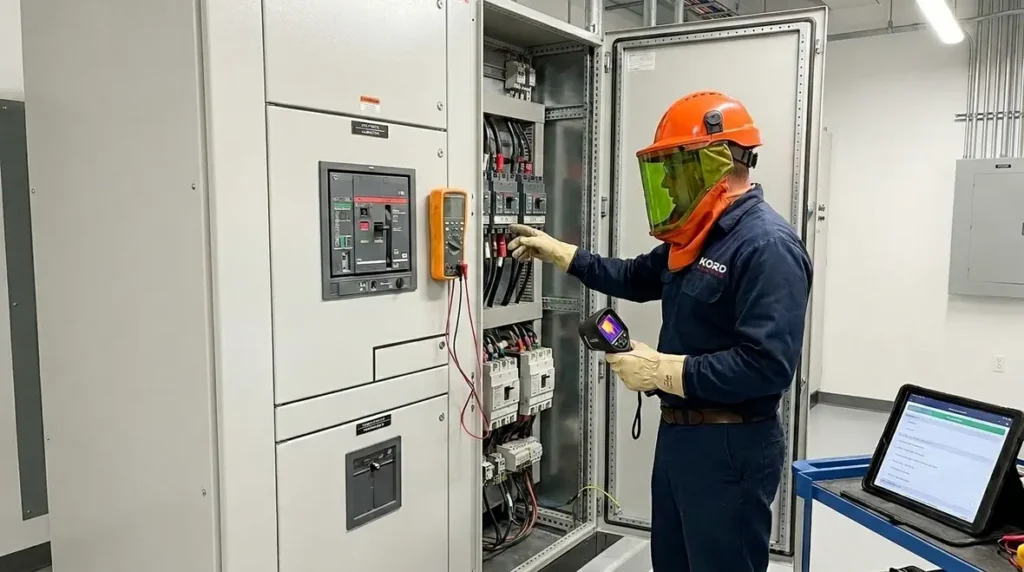
As our skilled technicians and expert service staff explain on site, maintenance is not a single task. It is a system of careful inspections, safe testing, and clean, documented actions that extend performance and help keep safety intact.
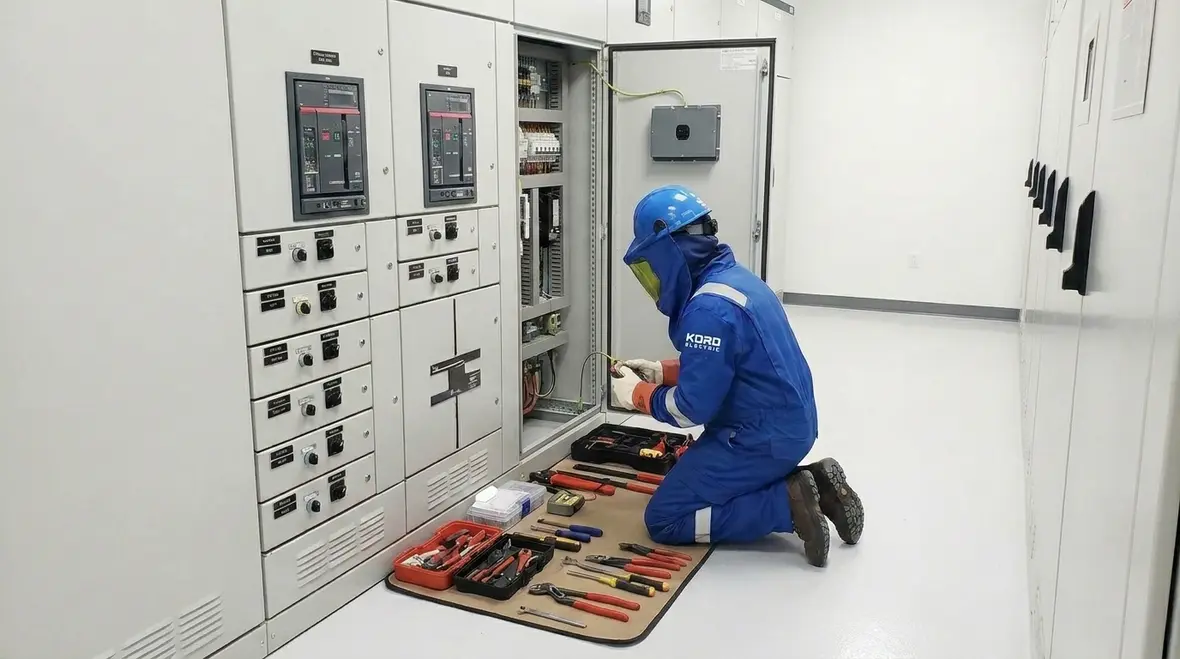
Inside every quiet electrical room, preventive care is the quiet hero. It works behind the scenes, keeps the lights on, and lets the rest of the building pretend everything “just works.” That is exactly how it should feel when switchgear receives the right level of attention at the right time.
For many facilities, that attention connects directly to structured electrical preventive maintenance programs. Instead of waiting for the next surprise outage, facility managers lean on a disciplined maintenance rhythm that supports uptime and reduces emergency calls. When we pair Preventive maintenance for industrial switchgear with broader electrical preventive maintenance services, the result is a calmer, more predictable operating environment that treats reliability as standard, not special.
What regular maintenance actually protects inside the lineup
Third person might describe switchgear as “equipment,” but we see it as a set of critical parts working together under real stress. Therefore, regular maintenance protects the connections, insulation, and protective functions that keep electrical distribution stable.
Over time, industrial switchgear faces heat cycles, vibration, dust, and minor contaminants that collect where they should not. Consequently, even small issues can grow: a loose connection creates extra heat, heat stresses insulation, insulation breakdown increases leakage, and protection may trip at the wrong time.
Our service staff often tells building managers something straightforward: if current pathways develop extra resistance, the switchgear starts paying the “interest” on that problem every day. The longer you wait, the more the cost compounds.
In addition, preventive care keeps protective devices operating with the right settings and response times. So, the goal is not only to stop failures. We also aim to keep protection correct so the system isolates faults quickly and safely.

That protection extends beyond a single enclosure. In many commercial and industrial buildings, switchgear feeds downstream panels, transfer switches, and specialized equipment. When we keep the lineup healthy, every component downstream benefits from more stable power, more accurate fault isolation, and fewer “mystery” trips that send everyone hunting for answers.
Hidden conditions inside switchgear often overlap with the same risks that show up in other electrical equipment: loose terminations, aging insulation, contaminated enclosures, and components that have quietly drifted beyond their ideal operating range. That is why we connect switchgear maintenance with broader risk reduction strategies, including the kind of inspection mindset described in Kord Electric’s guidance on hidden electrical risks in commercial buildings. When teams understand how small internal issues grow, they are more likely to schedule maintenance before those issues become full-scale outages.
How Kord Electric technicians build a maintenance plan that sticks
When Kord Electric schedules work, we do it with discipline. We align tasks with the facility’s operating patterns, the switchgear type, and site conditions. Then we document each step so others can trust the results, not just the report title.
Our technicians follow a clear sequence. First, they review prior service notes and fault history, because history is one of the best predictors of future trouble. Next, they inspect the gear for visible issues like corrosion, contamination, moisture signs, worn labels, loose hardware, and abnormal wear.
After that, we test and verify. We do not treat testing as a checkbox. We interpret findings against manufacturer standards and site expectations. Then we recommend corrective actions that match the risk level and uptime needs of commercial and industrial facilities.
And yes, we sometimes get the “Can we just do this once a year?” question. Our answer is calm, but direct. A schedule that matches actual stress and usage helps reduce surprises, and surprises always feel more expensive than planned work. Like buying last minute concert tickets, you pay more and you enjoy it less.
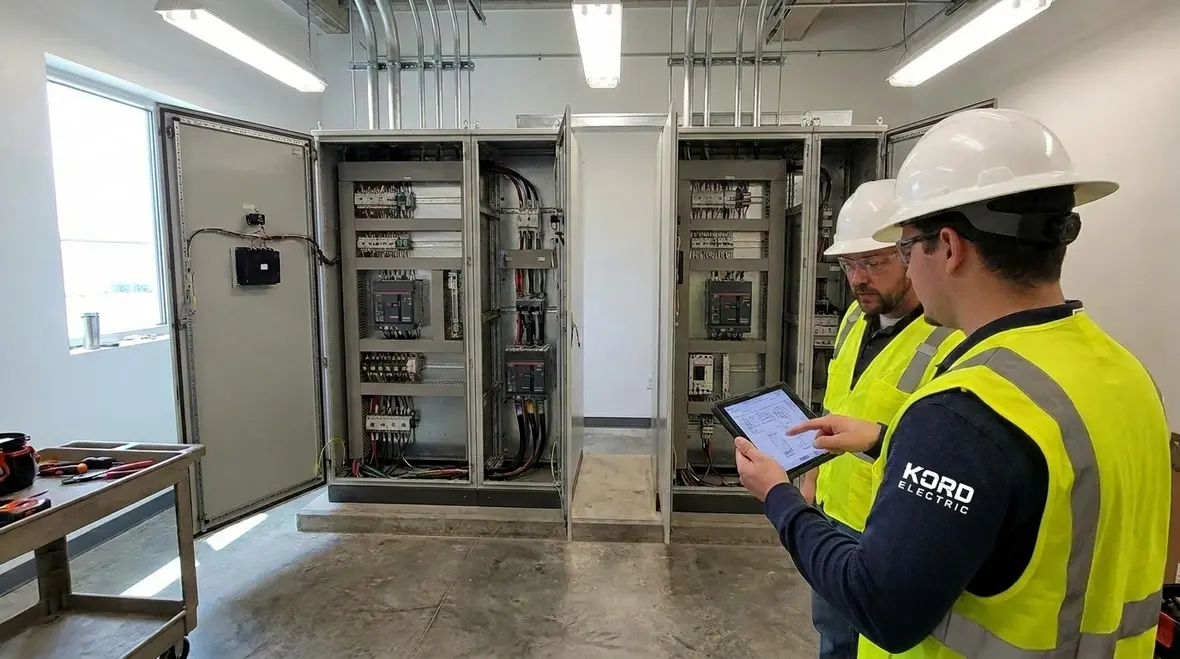
In many facilities, that schedule takes its cues from standards-based approaches like NFPA 70B. When we help a client build a plan, we often reference the same practical ideas covered in our NFPA 70B electrical panels and switchgear maintenance guidance. That means focusing maintenance where it truly reduces risk, documenting conditions clearly, and aligning service windows with how the building actually runs day to day.
From there, the plan becomes a living system. Condition data from each maintenance cycle feeds back into scheduling, so heavily loaded gear, harsh environments, or aging equipment receive focused attention. Lighter duty areas still get checked, but without stealing time and budget from the places that matter most for uptime.
Which checks extend switchgear life the most
If a facility wants a concrete answer, we provide one. Certain maintenance actions tend to deliver strong life extension, because they address common failure paths. Kord Electric focuses on the checks that protect power flow and reduce overheating risk.
1) Tightness and connection integrity
Loose connections create heat. Therefore, our team inspects and checks terminations and bus interfaces. We verify that connections stay secure and clean, because metal surfaces must contact properly, not loosely.
2) Insulation and contamination control
Moisture and dust can lower insulation performance. Consequently, we clean where needed and inspect insulation surfaces and barriers. We look for early deterioration patterns before they become faults.
3) Mechanical operation and wear
Switchgear must move when it should. So we check mechanisms, interlocks, and the smoothness of operations. If a linkage binds or an interlock behaves differently, protection can lose speed and accuracy.
4) Control power and protective device verification
Protection depends on control circuits and settings. Hence, we verify device performance and confirm that alarms and trips match the design intent. We also ensure wiring terminations remain secure and free from corrosion.
5) Thermal indicators and hot-spot awareness
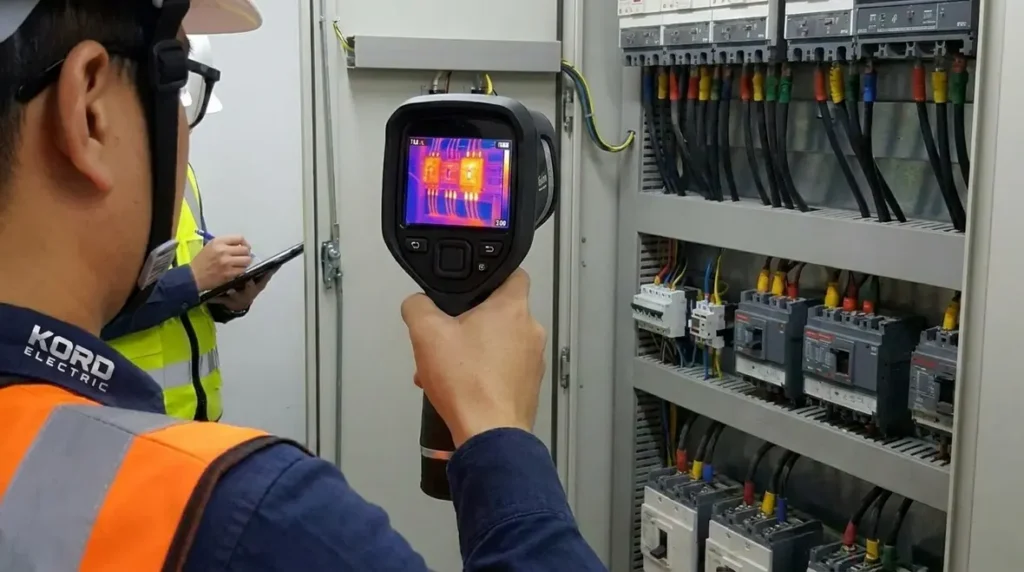
Even without dramatic failure, thermal stress leaves clues. We incorporate thermal awareness into maintenance planning, so operators can address hotspots before they force an outage.
As our expert service staff likes to say, “Switchgear tells on itself.” You just need to know how to read the signals.
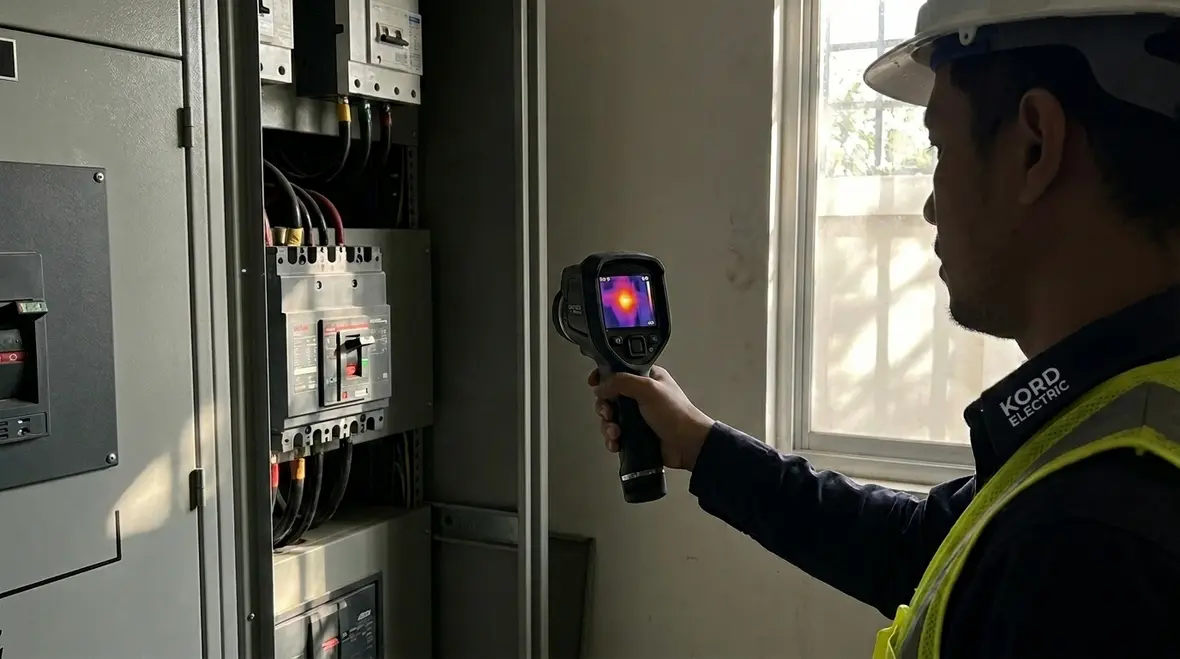
Those signals become even clearer when we combine traditional inspections with tools like infrared and thermal imaging. As described in our core electrical preventive maintenance services, thermal checks reveal patterns of abnormal heat long before damage becomes visible. When we fold that data into our Preventive maintenance for industrial switchgear routines, facilities can address small hotspots with targeted repairs instead of waiting for them to grow into full replacement projects.
Testing, documentation, and safety as a full-time mindset
In a reliable facility, maintenance does not live in someone’s head. It lives in records, test results, and clear procedures. Kord Electric prioritizes safe work practices and complete documentation so owners and operators can manage risk with confidence.
First, we follow safe isolation and verification steps. Then we conduct tests in a way that protects personnel and equipment. Afterward, we provide findings that make sense to facility teams. We avoid vague language because operators need clarity, not mystery.
Additionally, documentation helps with budgeting and planning. When we capture condition data, it supports smarter decisions about repairs, replacements, or component upgrades. Therefore, facilities can plan shutdown windows and avoid last-minute requests that disrupt operations.
Moreover, records help during audits and internal reviews. Many commercial and industrial sites run on compliance expectations, and we help them meet those needs without creating chaos.
And if someone thinks maintenance reports are boring, we get it. But boring is good. Boring means the gear is behaving, and the documentation shows we checked it.
Panel labeling, NFPA 70 and NFPA 70B alignment, and clear one-line diagrams all support this mindset. When you combine strong Preventive maintenance for industrial switchgear with practices like those in our electrical panel labeling best practices guide and our overview of NFPA 70 national electrical code requirements, your maintenance records, labels, and safety procedures all point in the same direction. That makes every test result more useful and every future inspection faster to complete.
What happens when maintenance is delayed, even “just a little”
Delays rarely stay small. A facility might postpone service due to demand, staffing, or a tight outage calendar. However, industrial switchgear does not pause its stress just because the schedule feels busy. Sooner or later, small problems turn into costly interruptions.
When routine tasks slip, contamination builds, connections loosen slightly, and protective functions can drift from expected behavior. In the worst cases, heat damage or insulation breakdown creates faults that require urgent corrective action.
Also, delayed maintenance makes troubleshooting harder. Instead of finding a predictable pattern, teams face uncertainty. That uncertainty leads to longer downtime, higher labor hours, and more equipment downtime risk during the repair window.
Our technicians and expert service staff often compare it to a car inspection. You can skip it and drive “fine” for a while. Then one day you hear a sound you never wanted to learn. Switchgear has its own version of that sound. It is usually not cute. It is expensive.
In commercial buildings, those “sounds” sometimes take the form of emergency outages traced back to panel or switchgear failures. As we explain in our breakdown of emergency power failures in commercial buildings, many of those events could have been prevented or softened by timely Preventive maintenance for industrial switchgear. Instead of juggling crises, facility teams can invest that same energy into planned shut downs, coordinated testing, and incremental upgrades.
How to choose a maintenance rhythm for commercial sites
We know major property buildings and commercial and industrial facilities operate differently from one another. Therefore, we align the maintenance rhythm with real conditions: load levels, environmental factors, operating hours, and past performance.
Then we set expectations. Some components benefit from more frequent checks, while other tasks follow a planned cycle. We also coordinate with facility teams to reduce disruption. That matters because a power distribution system does not care about convenience. It cares about time and condition.
For clients with varying occupancy or seasonal loads, we adjust priorities. For example, during periods of heavier operation, preventive work can reduce risk. In calmer periods, we can complete tasks that require more time.
Our approach stays practical. We do not sell fear. We support uptime. And we treat switchgear like the mission-critical asset it is, because it protects the electrical backbone that keeps lights on, motors running, and critical systems stable.
That rhythm becomes even more important in facilities with sensitive loads, such as data centers or buildings with complex automation. As we outline in our data center electrical requirements for uptime and data center electrical infrastructure essentials, when a UPS, switchgear, or feeder system does not perform as expected, the consequences travel instantly to every connected server and process. Carefully timed Preventive maintenance for industrial switchgear helps ensure those components respond correctly when conditions change.
FAQ
Final word: schedule preventive maintenance and protect uptime
Switchgear life does not extend by luck. It extends through steady attention, safe testing, and disciplined documentation. Kord Electric helps commercial and industrial facilities and major property buildings keep their electrical distribution reliable with preventive service that fits real operating conditions. If you want fewer surprises, shorter outages, and better protection performance, contact our team to review your current switchgear condition and maintenance rhythm. We will walk the site, explain the findings in plain language, and help you plan the next steps.
For facility leaders who want to coordinate switchgear service with other reliability upgrades, Kord Electric also delivers targeted offerings such as voltage fluctuation diagnostics and repair for commercial and industrial facilities and full-scope electrical preventive maintenance programs. When these services work together, your building gains a stronger electrical backbone, clearer documentation, and a maintenance strategy that supports long-term uptime instead of short-term fixes.
If you are ready to move from reactive repairs to a reliable maintenance rhythm, industrial switchgear is one of the smartest places to start. Treat it like the mission-critical asset it is, give it the preventive care it deserves, and your entire electrical distribution system will return the favor with quieter, more predictable performance year after year.