
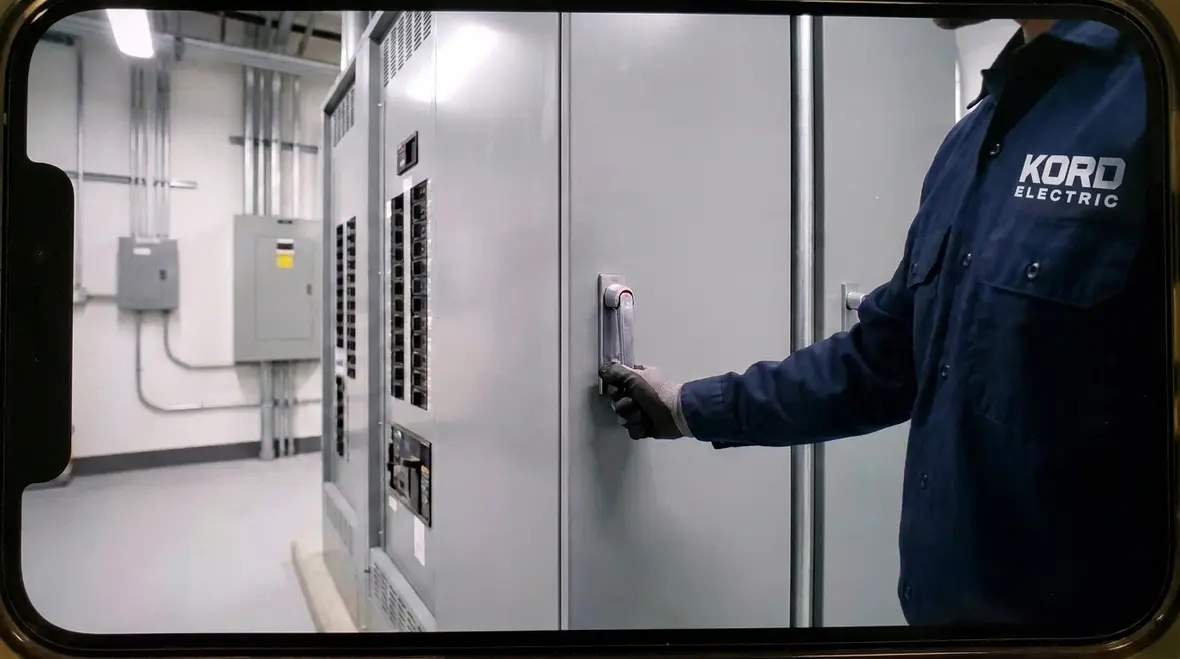
NEC Locked Service Overcurrent Devices in Section 230.92
NEC compliance, the quiet protection inside your electrical service
At Kord Electric, we help commercial and industrial facilities keep power reliable and safe. One part of that job is understanding NEC locked service overcurrent devices. Under NFPA 70 Section 230.92, locked service overcurrent protective devices add a layer of control so key protection stays where it belongs and does not get casually changed by the wrong hands. In other words, it keeps the “tinkerers” from treating your service like a hobby project. And yes, we have seen electricians, vendors, and well meaning staff try to “improve” things. Then we come in, calmly, with our expert staff and explain why the code wants these devices secured.
In this article, we explain what Section 230.92 requires, why it matters, and how our technicians verify the setup in real buildings, not just on paper. Along the way, we will connect this topic to broader NEC planning so you can see how locked service protection supports the same big picture you will find in resources like our NFPA 70 reading guides and application overviews.
What NFPA 70 Section 230.92 really requires for locked protection
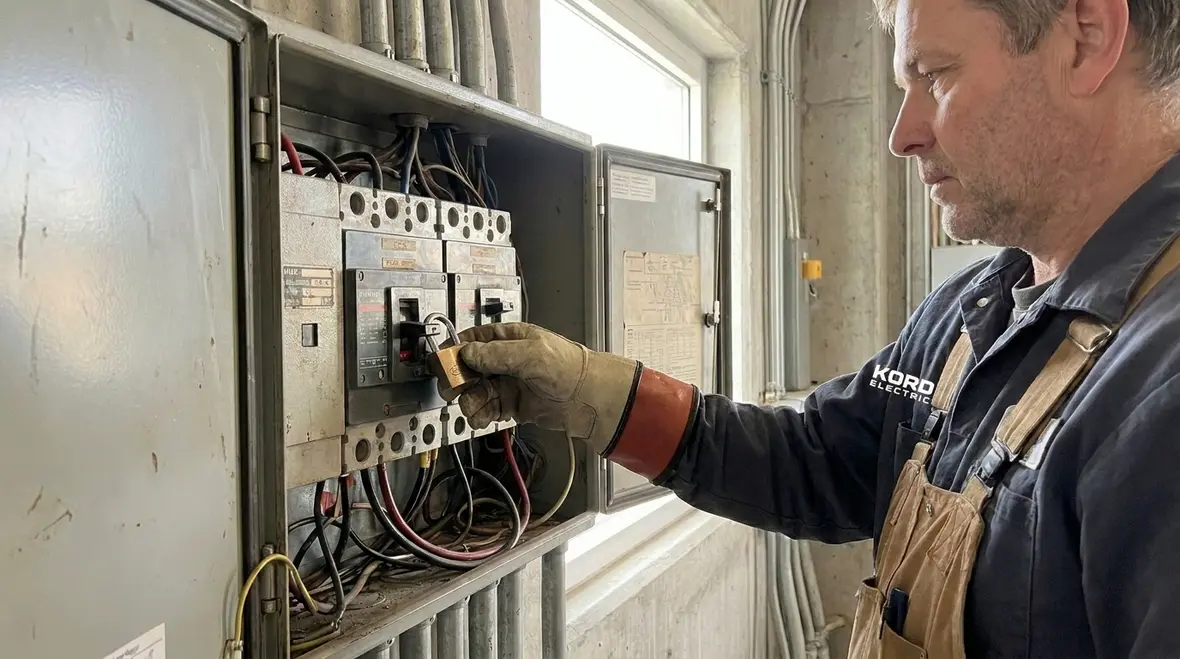
NFPA 70 Section 230.92 focuses on locking the service overcurrent protective devices in specific service locations. The rule does not exist for decoration. Instead, it helps prevent unauthorized changes that can reduce fault protection or delay proper clearing during a short circuit.
To keep things clear, our technicians look at three practical pieces of the requirement. First, they identify the service overcurrent protective device in the service equipment. Next, they confirm that the device is in a place and condition that meets the locking intent. Finally, they verify that the method used to secure access matches the compliance goal, which is to keep adjustments from casual access.
Now, here is where people often get tripped up. The device itself may look fine, but the access route might still allow unauthorized operation. Therefore, we do not treat this like a quick visual check only. We trace the access path and confirm that the lock strategy prevents improper changes.
When we review service equipment, we also align our interpretation of Section 230.92 with the broader NEC structure. Articles that walk through how to read NFPA 70 and the 2026 NEC application requirements and scope remind facility leaders that each section of the code sits inside a bigger safety plan. Section 230.92 is one of those sections that quietly protects everything downstream.
Why the code focuses on overcurrent protection access and control
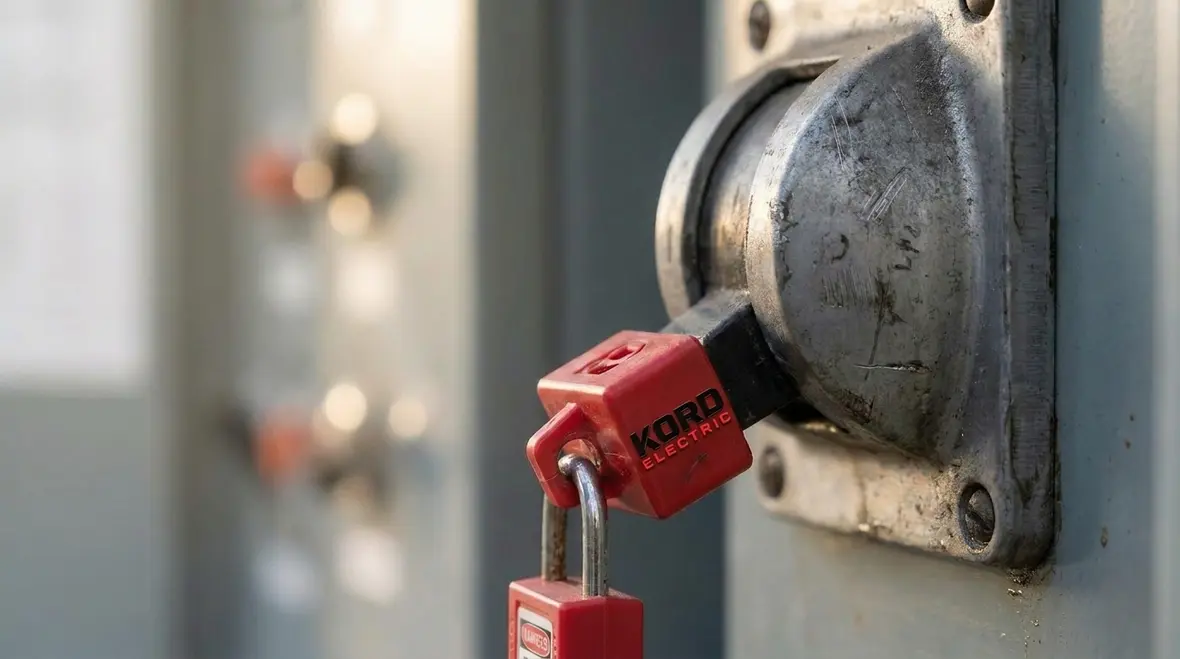
Overcurrent protective devices exist to stop damage. When a fault happens, they clear the circuit quickly enough to protect conductors, equipment, and people. However, that performance depends on the correct settings and the correct device operation. Therefore, if someone changes the device rating, setting, or position, it can remove the intended protection.
Think of it like a fire alarm. If someone decided to “test” it by changing the sensitivity to a level that never trips, the system might still look present. Yet it would fail when it matters. Likewise, NEC locked service overcurrent devices reduce the chance that the protection you paid for becomes the protection you did not intend.
Also, industrial and commercial facilities often include multiple teams: facilities, maintenance, contractors, and sometimes temporary trades. Even when everybody means well, the chance of accidental adjustment rises when access stays open. Consequently, our expert service staff treats locking as part of a larger control plan for safety, uptime, and accountability.
This is the same mindset we bring to other NEC-driven topics, such as surge protection, reconditioned branch circuit equipment, and branch circuit scope. If you have already read our coverage of industrial power surge protection for facilities or NEC reconditioned branch circuit equipment, you have seen the pattern: correct configuration, controlled access, and clear records.
Where locked service protection usually shows up in commercial power systems
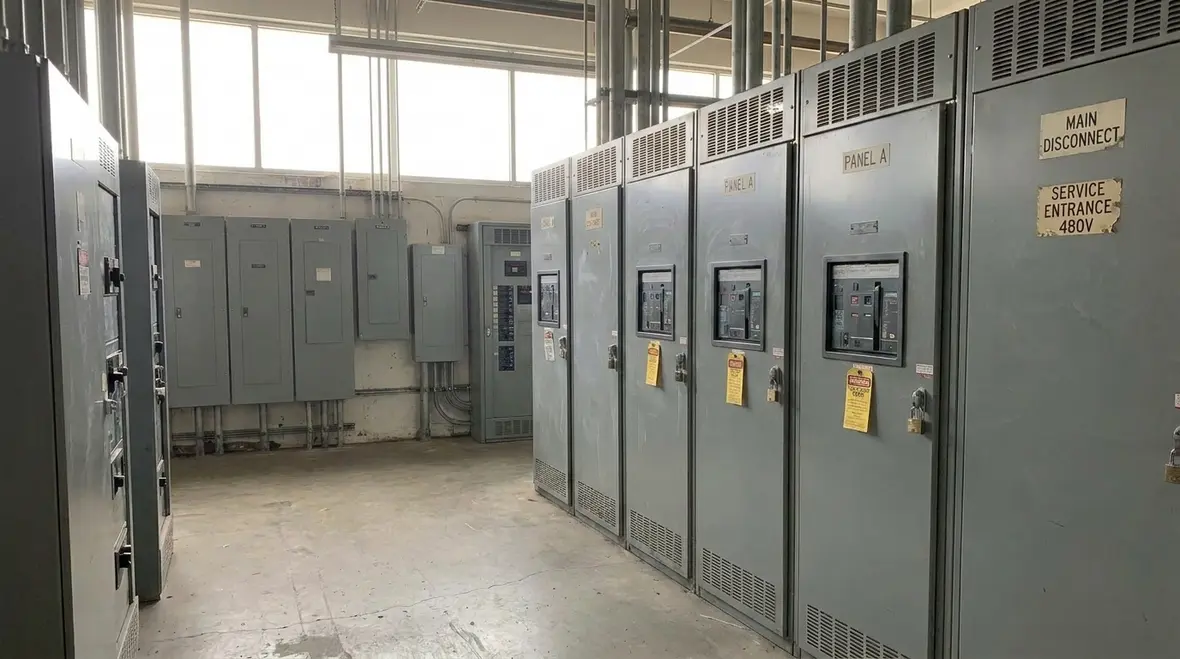
Most commercial and industrial buildings do not rely on one single “simple” panel. They rely on a service entrance, distribution equipment, feeders, and layers of protection that work together. Section 230.92 targets a key piece of that puzzle, the service overcurrent protective device, because it sits at the start of the system.
In the field, our technicians commonly encounter these devices in the main service section where utility service meets building distribution. However, the exact arrangement varies by equipment type, building layout, and vendor design. As a result, we handle each site by reviewing drawings, checking equipment labels, and inspecting the physical installation.
Furthermore, facilities that serve large loads like HVAC systems, pumping systems, process equipment, and lighting often depend on stable service to avoid downtime. When a locked protection device is missing or improperly secured, the risk grows. We often see this during upgrade work, where new contractors enter the area and the original locking setup gets disturbed. That is why we document the locking condition before and after service work.
And yes, sometimes a lock is “present,” but it does not actually control access the way the code intends. It is like a security gate that swings open if you push from the right angle. Our job is to check what happens in real use, not in a brochure.
For complex properties like data centers, entertainment venues, studios, and major tenant improvements, this front-end protection connects directly to project planning. We often pair Section 230.92 checks with work on NEC electrical code for data centers, film studio electrical requirements, or tenant improvement electrical services, because service protection has to support the loads people actually run.
How our team verifies compliance during inspection and service work
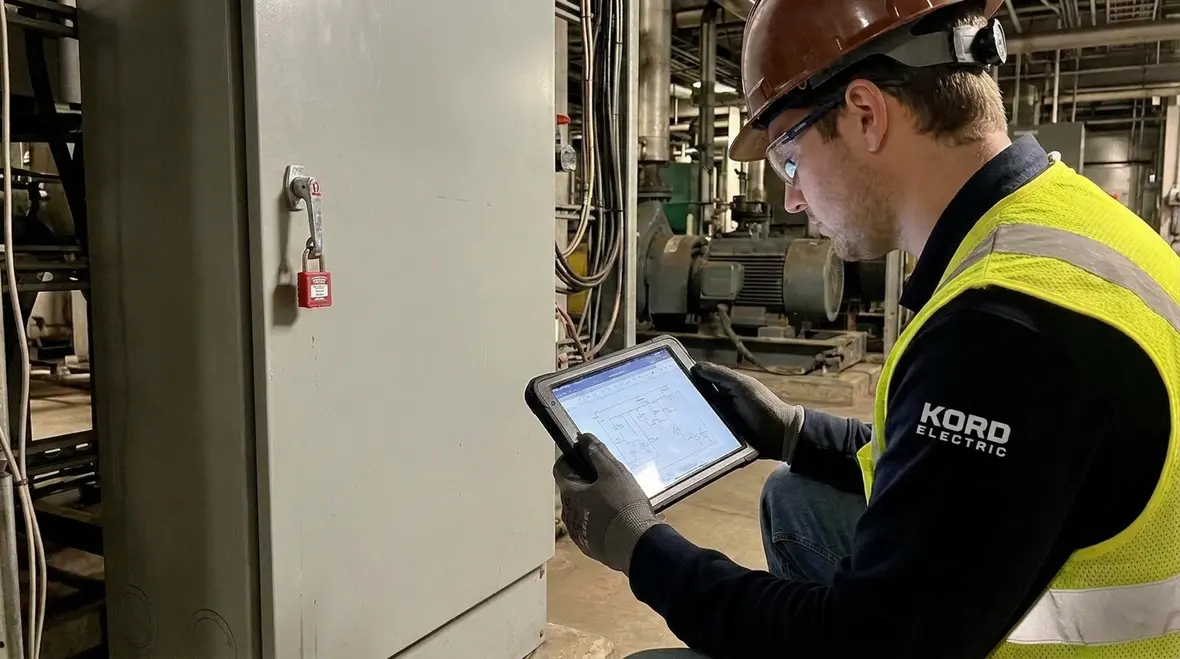
Kord Electric supports commercial and industrial facilities, so we work in environments where uptime matters and shutdowns cost money. We aim to make the verification process practical. Instead of slowing teams down, we build a clear checklist and explain each item in plain language.
Here is how our expert service staff typically approaches NEC locked service overcurrent devices on site:
- Identify the service overcurrent protective device and confirm the equipment boundaries around it.
- Inspect locking method for the intended access control. We check the lock mechanism and whether it stops unauthorized operation.
- Confirm installation condition after any maintenance or equipment replacement. We do not assume it stayed correct.
- Document the condition with notes and photos so facilities teams have a clean record.
- Explain the “why” to the people on the floor so the same mistake does not return next month.
Additionally, we align our work with the broader approach in NEC and related code guidance, the kind you find across resources like Kord Fire and fire-focused code summaries. While those resources cover wide ground, the main theme stays steady: safety systems require correct configuration, and access control protects the configuration.
During these checks, we also watch for a common chain reaction. If the service overcurrent device access stays uncontrolled, then other protective and safety measures can get loosely managed too. Therefore, we treat locking as an entry point to stronger electrical service discipline, just as we do when we walk through the general requirements scope for electrical safety in NEC 110.1.
Common issues we see with locked service overcurrent protective devices
When facilities ask us why they keep hearing about Section 230.92, we usually respond with a simple point: the problems are real, and they show up in the places nobody wants to deal with after a failure.
Here are frequent issues our technicians find in commercial and industrial buildings:
- Locks present but ineffective because access still allows operation without authorization.
- Missing or altered hardware after equipment work, vendor visits, or panel replacements.
- Unclear responsibility where no one owns the locking practice after a maintenance cycle.
- Improper access control because the locking approach does not match the equipment arrangement.
- Documentation gaps that make it hard to prove compliance during reviews.
Now, we are not here to blame anyone. Facilities teams juggle a lot. However, code does not run on good intentions. It runs on correct setup. So we help teams fix the condition early and build a repeatable process.
And if you are wondering whether this matters beyond compliance checklists, it does. Faults do not ask for permission, and electrical damage does not care how busy your contractor schedule felt. Consequently, a properly secured service overcurrent protective device helps protect equipment and supports safe operation.
During troubleshooting, we sometimes connect these findings to other NEC topics already on a client’s radar, such as branch circuit scope under NFPA 70 Section 210.1 or reconditioned branch circuit equipment under Section 210.3. Once people see how easily misconfigurations can creep in, they appreciate why Section 230.92 insists on real, effective locking—not just hardware that looks the part.
How this links to broader NEC safety planning for facilities
Locked service protection does not stand alone. It works with grounding, bonding, equipment labeling, and the overall plan that keeps your building safe in both normal operation and fault conditions. That is why we connect Section 230.92 to the larger NEC workflow, rather than treating it like a small isolated rule.
For example, commercial and industrial sites often coordinate electrical systems with life safety and fire protection planning. That coordination matters because electrical failures and fire risks can overlap in real incidents. Industry groups that focus on fire pumps and life safety planning also emphasize the need for dependable protective systems. Resources that explain NFPA 70 from a fire protection angle send the same message you will see on our NEC-focused blog: if the protection does not operate as intended, everything behind it feels the impact.
When our technicians explain NEC locked service overcurrent devices to facility managers, we connect it to emergency readiness. We also highlight operational discipline: who can access the service equipment, how locks get verified after work, and how the facility records proof. Then we align that plan with future upgrades, since equipment access patterns often change when a building grows.
So, whether you use our services in an existing facility or during a major property upgrade, we help you keep the protection story consistent. No magic. Just solid installation and smart controls. For teams that want a deeper orientation to the code itself, we often recommend pairing this article with our guide on understanding NFPA 70: the National Electrical Code explained for 2026. Together, they show how a single rule like Section 230.92 lives inside your broader electrical safety strategy.
FAQ about NFPA 70 Section 230.92 and locked service protection
Facilities leaders usually ask similar questions when they first focus on NEC locked service overcurrent devices. Instead of treating those questions like side notes, we address them directly and fold the answers into your maintenance and inspection plans.
From code rule to real-world protection: what we help you do next
If you run a commercial or industrial facility, you cannot afford “close enough” electrical service protection. Kord Electric helps you verify NEC locked service overcurrent devices under NFPA 70 Section 230.92 and keep them correct after maintenance, upgrades, and contractor work. Our technicians explain what we see, fix what needs fixing, and document the result so your team can move forward with confidence.
We routinely integrate this work with broader NEC support: surge protection design, branch circuit evaluation, data center and studio power planning, and preventive maintenance across large properties. When your facility sits in Los Angeles County, our wider Los Angeles County electrical services team can extend that same discipline from the service entrance out through your distribution, specialty equipment, and critical infrastructure.
Whether you are facing an upcoming inspection, planning a tenant improvement, or simply want a calmer relationship with your service equipment, we are ready to help you turn NEC Section 230.92 from a line in a book into a layer of real protection for your building.
Contact us today to schedule an electrical service review with our expert staff, verify your locked service overcurrent devices, and build a repeatable process that keeps them compliant, effective, and documented over the life of your facility.


