
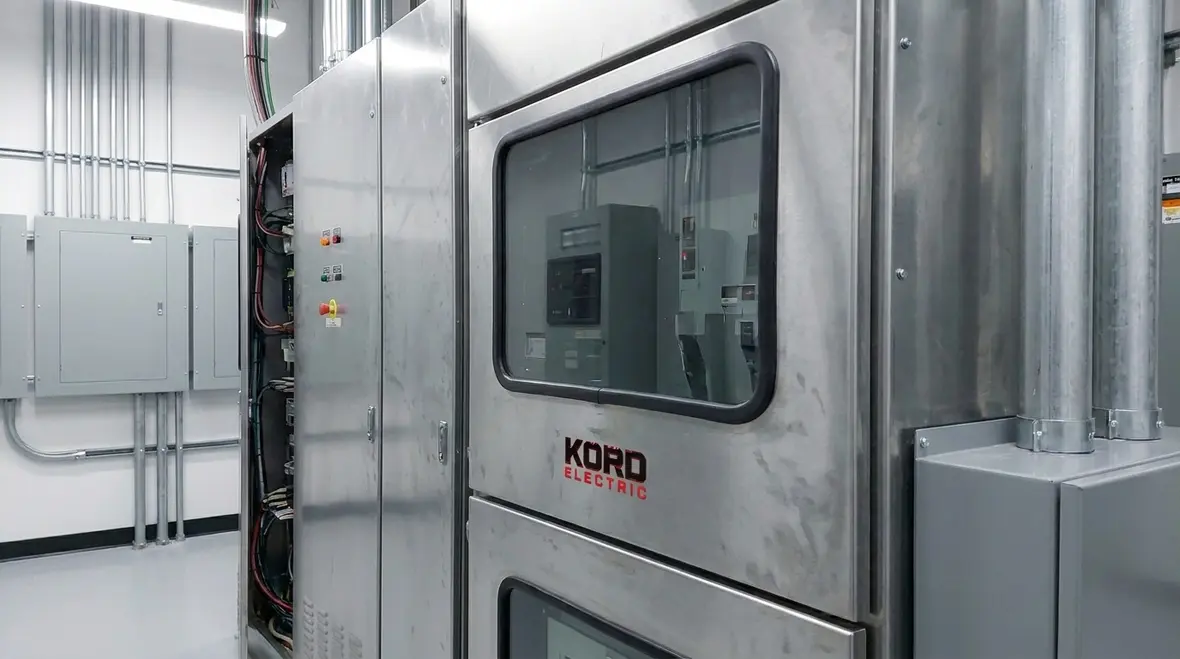
NEC indicating service disconnect 230.77 for safer power
NEC indicating service disconnect: the simple start that prevents big problems
At Kord Electric, we see the same issue show up in commercial and industrial facilities: people want power, but they do not want surprises. That is why NEC indicating service disconnect requirements matter. Early in a project, our team explains how NFPA 70 Section 230.77 shapes what must be labeled and how indicating features work so operators can find the right disconnect quickly and safely.
Third person or not, the reality is this: when a system fails during a real-world moment, confusion costs time, and time costs money. So we break it down in plain language, with our technicians and expert service staff guiding the process like a calm co pilot. And yes, if you ever feel like an electrical panel is speaking in riddles, that feeling is normal. We just turn the riddles into instructions.
Where NFPA 70 Section 230.77 fits in the service setup
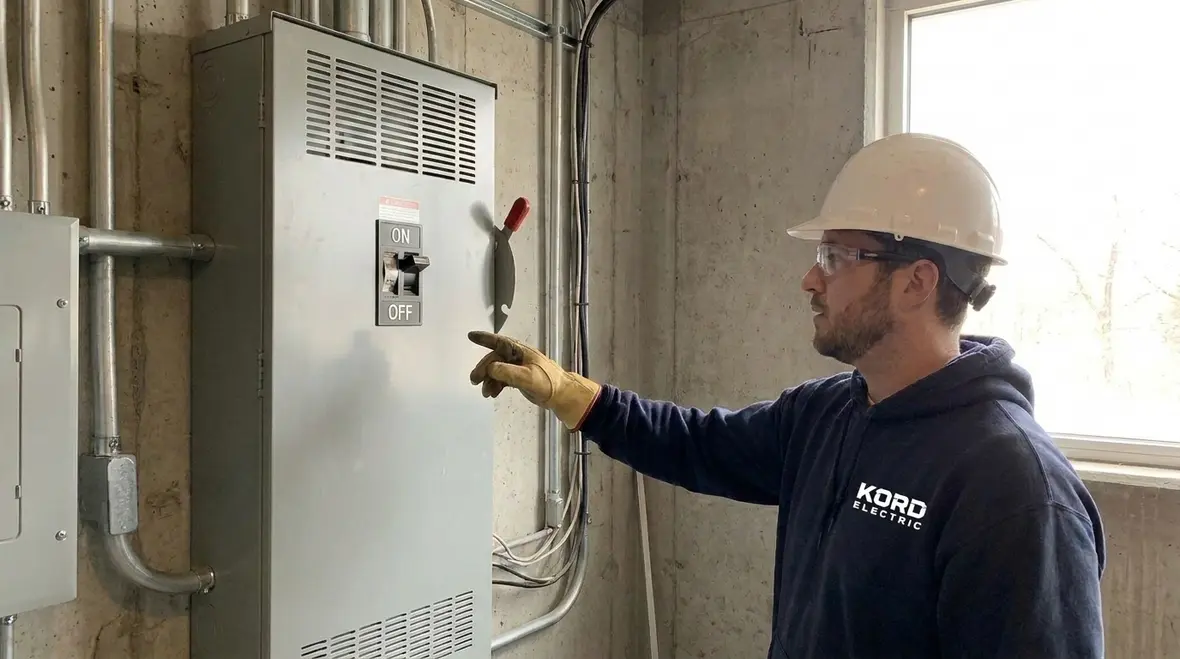
NFPA 70 Section 230.77 lives within the rules for service equipment. In commercial and industrial buildings, the service disconnecting means controls the connection between the utility supply and the building wiring. Therefore, the section focuses on how those disconnects get identified and how indicating systems communicate their status.
When a facility has multiple loads, different floors, and lots of equipment, operators need clarity. Then, during maintenance or emergency response, they must know exactly what equipment is de energized. As a result, Section 230.77 does not exist to add paperwork. It exists to help people act fast and stay safe.
Our expert service staff often points out that the “service” is not just one thing in the real world. It can involve more than one disconnect, especially when a site uses distribution sections, feeders, or multiple service sections. Consequently, the indicating rules help connect the visible labels to the actual electrical state.
For many facilities, Section 230.77 also lives alongside foundational NEC scope and safety discussions. Teams who already track the big-picture rules in resources like Kord Electric’s guide on 2026 NEC application requirements and NFPA 70 scope and the broader explainer What Is NFPA 70? Understanding the National Electrical Code tend to adopt indicating requirements faster because they already see how service equipment fits into the bigger code story.
What the indicating requirement actually tells people to do
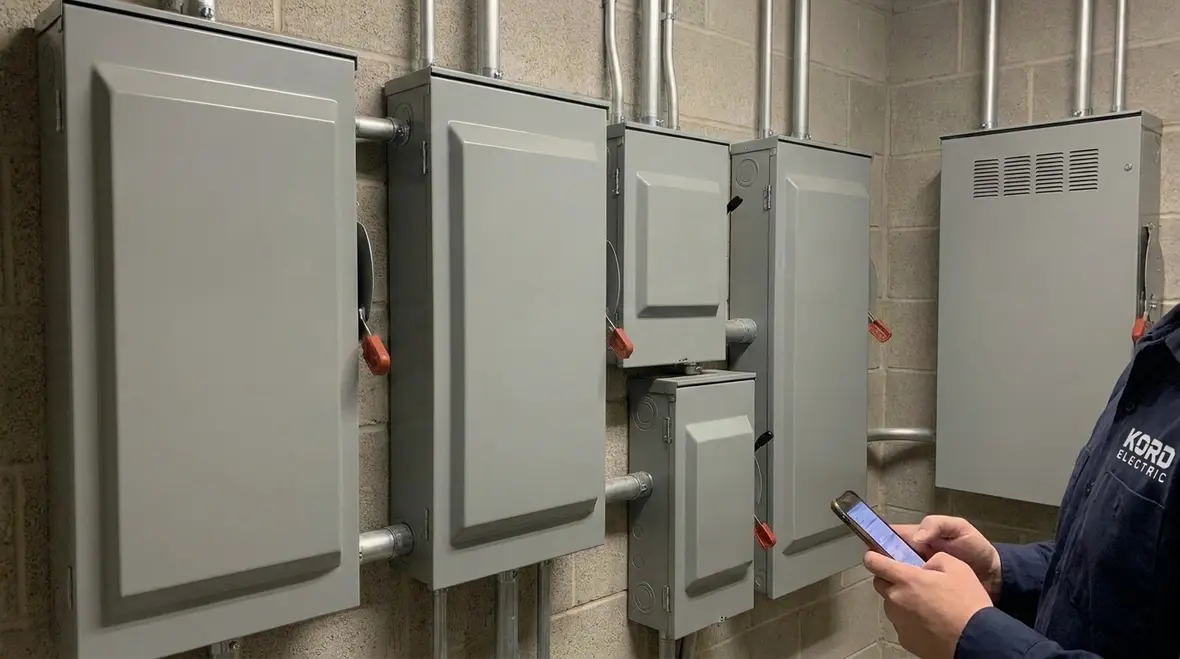
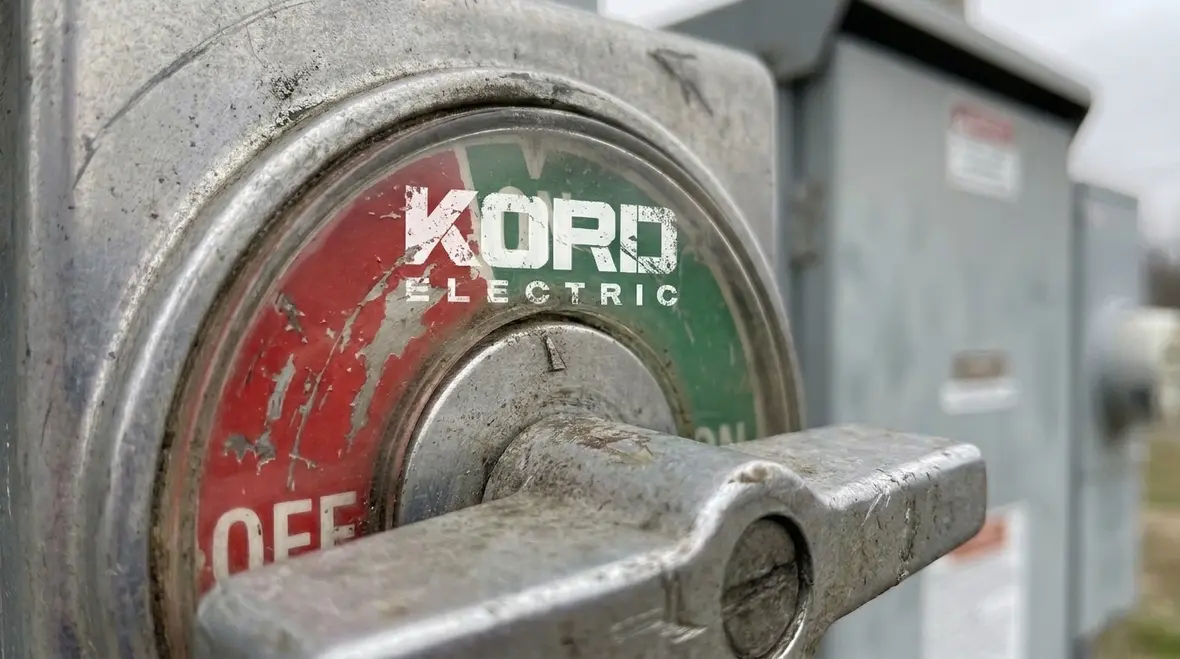
Section 230.77 requires that the equipment provide an indicating method for the service disconnecting means. In practice, the facility must include a way to show whether the service disconnecting means is in the on or off position, and that indication must match the real switching status.
So, instead of relying on guesses like “the handle looks right” or “it was on last week,” the system communicates. Moreover, it must be reliable enough that operators can trust it under stress.
In many commercial and industrial settings, we help teams decide where the indicating feature needs to be visible. For example, if a building uses a central control room, the indication should support the people who run the systems. If a site relies on maintenance staff walking to equipment rooms, the indication must still help them confirm the correct disconnect quickly.
To be clear, this is not about decoration. Indicating features connect safety labeling to actual switch position, and that alignment reduces risk during troubleshooting.
At the same time, indicating methods do not live in a vacuum. They relate to broader NEC expectations around safe operation and workmanship, as described in Kord Electric’s guides to NEC 110.1 general requirements for electrical safety and NFPA 70 Section 110.7 wiring integrity workmanship standards. When indication, labeling, and workmanship all line up, facilities get fewer surprises, fewer callbacks, and far fewer “why is this energized” moments.
How we specify it for commercial and industrial systems
When Kord Electric designs and services electrical systems for major property buildings, we treat Section 230.77 as part of the operating experience. That means we look beyond the panel schedule and focus on how people work during normal use and during outages.
First, our technicians confirm the service configuration. Then, we map where disconnects live and who needs to see their state. After that, we align labeling, indication placement, and identification methods so the facility can act without delay.
Next, we consider the building workflow. For example, a manufacturing plant might use shift-based maintenance and rapid troubleshooting. A high occupancy building might involve facility operations and security teams. Either way, the indicating feature supports decision making, not just compliance.
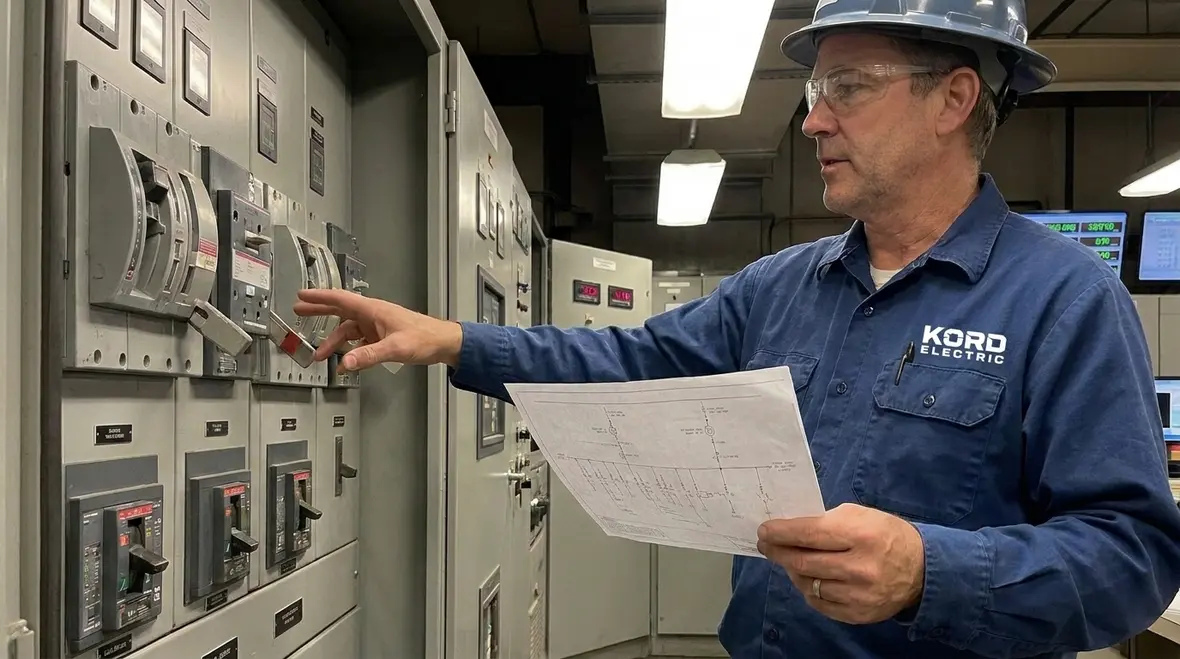
We also coordinate with the rest of the electrical documentation. Therefore, the indicating method should match single line diagrams, the physical equipment labeling, and the field markings that contractors and inspectors rely on. If the label says one thing and the indication shows another, people will stop trusting the system. And once trust breaks, you get the kind of “who touched what” meeting that lasts longer than it should.
On larger projects, that workflow often connects to broader planning tools. Articles such as Kord Electric’s data-driven electrical design for commercial and industrial facilities and the branch-circuit-focused NFPA 70 Section 210.1 branch circuits scope explained show how service equipment indication is one part of a much bigger picture. When design models, documentation, and Section 230.77 indication all pull in the same direction, operators can trust what they see.
Where indicating should be visible and why that matters
Indicating only helps if it is seen. Because of that, Section 230.77 expectations tie to practicality. The indication needs to be readable at the point where someone would reasonably check the disconnect status.
In real facilities, that often includes the following situations:
- Service equipment rooms where maintenance staff confirm a disconnect before working
- Central control or monitoring areas where operators manage operational states
- Locations where multiple disconnects can confuse “which one” during emergencies
- Systems with remote or distributed equipment that can hide the actual physical switch
Additionally, indicating helps with coordination. When operators can verify the disconnect state, they can coordinate other processes like lockout and tagout, testing, and safe restart. As a result, less time gets lost to uncertainty.
We often explain this with a simple analogy. It is like a theater marquee. If the movie title looks like it might be wrong, people still go in, but they get annoyed. Then they get louder. In electrical work, “annoyed” is fine. “Accident” is not. Indication prevents the confusion that creates those high stakes moments.
Common installation mistakes we see in the field
Even when teams mean well, problems show up. That is why our expert service staff performs field checks and supports commissioning for commercial and industrial facilities. Here are common issues we see around indicating service disconnecting means systems and how we prevent them.
- Mismatch between indication and switch position where wiring, auxiliary contacts, or device configuration does not track the actual disconnect state
- Missing or unclear labeling where operators cannot confirm which disconnect the indication belongs to, especially in rooms with multiple sections
- Indication placed where nobody looks when the equipment status display ends up in a spot that works on paper but not during real operations
- Documentation that does not match field reality where drawings show one control scheme while the installed wiring supports another
- No verification during commissioning when teams skip functional checks that confirm the indication changes when the disconnect opens or closes
Then there is the “it passed last time” trap. Some facilities assume their older installation still meets current expectations. Even if it seems to work, operational safety still depends on accurate indication and clear identification. Therefore, we help teams validate the system during service upgrades and major maintenance cycles.
And yes, we have heard every joke. “The panel just feels psychic.” We get it. But in compliance and safety, feelings do not count.
Compliance and commissioning steps that keep facilities running
To make indicating systems effective, Kord Electric supports a practical process. First, we review the facility’s electrical one line diagrams and service arrangement. Next, we confirm the location and configuration of the service disconnecting means.
Then, we verify the indicating method. We test that the indication changes state exactly as the disconnect does, and we check that the indication stays reliable under normal operating conditions. After that, we confirm labeling clarity and alignment with field hardware.
Finally, we document what we verify. That step matters because commercial and industrial buildings evolve. Equipment gets added. Work shifts change. Someone who installed the system may not be the person maintaining it five years later. Therefore, clear records help the next team troubleshoot without guesswork.
We also coordinate with inspection and project stakeholders. As a result, compliance stays more than a box to check. It becomes a lived part of safe electrical operations.
In many jurisdictions, those inspections and enforcement conversations connect back to NEC authority discussions like the ones outlined in Kord Electric’s article on NFPA 70 Section 90.4 AHJ NEC enforcement and Kord Fire’s companion guide NFPA 70: All About The National Electrical Code (NEC). When you know how the authority having jurisdiction interprets service disconnect indication, you can plan upgrades that pass inspection the first time.
FAQ about NEC indicating service disconnect and NFPA 70 Section 230.77
NEC practice tips from our technicians for major property buildings
Because we work with commercial and industrial facilities, we focus on practical habits that reduce downtime and confusion. Our technicians share a few tips that keep indicating systems dependable.
- Label like you expect busy people: short, clear, and matched to the field hardware so operators can act under time pressure
- Verify after any change: if someone modifies service equipment, we confirm indication behavior before the facility resumes normal operations
- Train operators and maintenance staff: a quick walk through the indicating method prevents the “nobody knew” problem
- Keep records updated: new diagrams and notes help the next team understand the installed reality
And if you want a pop culture benchmark, think of it like a superhero suit. It does not matter that it looks right on day one if it fails when the villain shows up. We make sure the indication does its job when the stakes rise.
For facilities that rely on critical loads and dense equipment rooms, these habits sit alongside larger NEC strategies, like those discussed in Kord Electric’s NEC electrical code for data centers explained. Whether you operate a data hall, a manufacturing line, or a campus of major property buildings, the principle stays the same: indication, documentation, and training all work together to keep power predictable.
Conclusion: let Kord Electric verify your service disconnect indication
If your commercial or industrial facility relies on service equipment, you need indication that matches reality. Kord Electric supports your team with expert review, field verification, and commissioning guidance tied to NFPA 70 Section 230.77 expectations. We work with facility operators and contractors so they can maintain safe operations and reduce downtime during maintenance. Contact Kord Electric today to schedule an electrical service disconnect indication check and get confidence that your system communicates clearly when it matters most.
If your site is in the region, you can also connect this work with Kord Electric’s broader Los Angeles County electrical services, which support upgrades, troubleshooting, and NEC-driven improvements for commercial and industrial clients. And for teams mapping future projects, pairing this article with the deeper explainer Understanding NFPA 70: The National Electrical Code Explained for 2026 helps turn code language into a clear, facility-wide electrical strategy.


